Blogs / Collector Notes
AVI 765 1964 Re-Edition vs the 1953: Which Collectors Want
10 min read · 11/2/2026
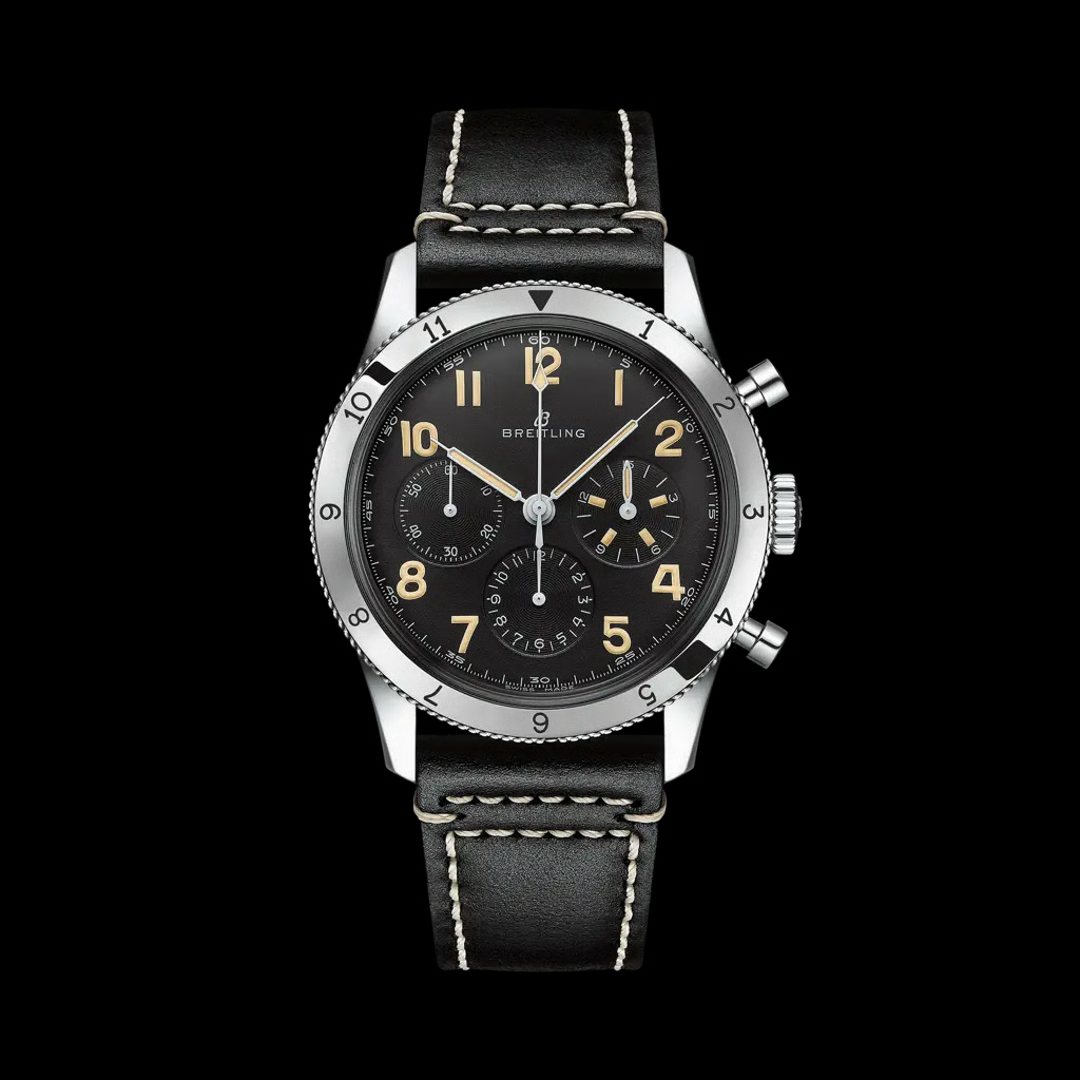
Breitling’s AVI Ref. 765 1953 and 1964 Re-Editions reinterpret two important chapters in the Co-Pilot’s history. Although both use a 41mm stainless-steel case and the hand-wound Manufacture Caliber B09, their dial designs, bezel treatments, and edition sizes create distinct collector appeal. Here’s how they compare and which one makes the better first purchase.
AVI 765 1964 Re-Edition vs the 1953: Which Collectors Want
Some watches are separated by decades but connected by a single design idea. Breitling’s AVI Ref. 765 Re-Editions are a good example. The 1953 and 1964 versions draw from different moments in the history of the Co-Pilot, yet both retain the practical proportions and chronograph-first character that made the original aviation watch distinctive.
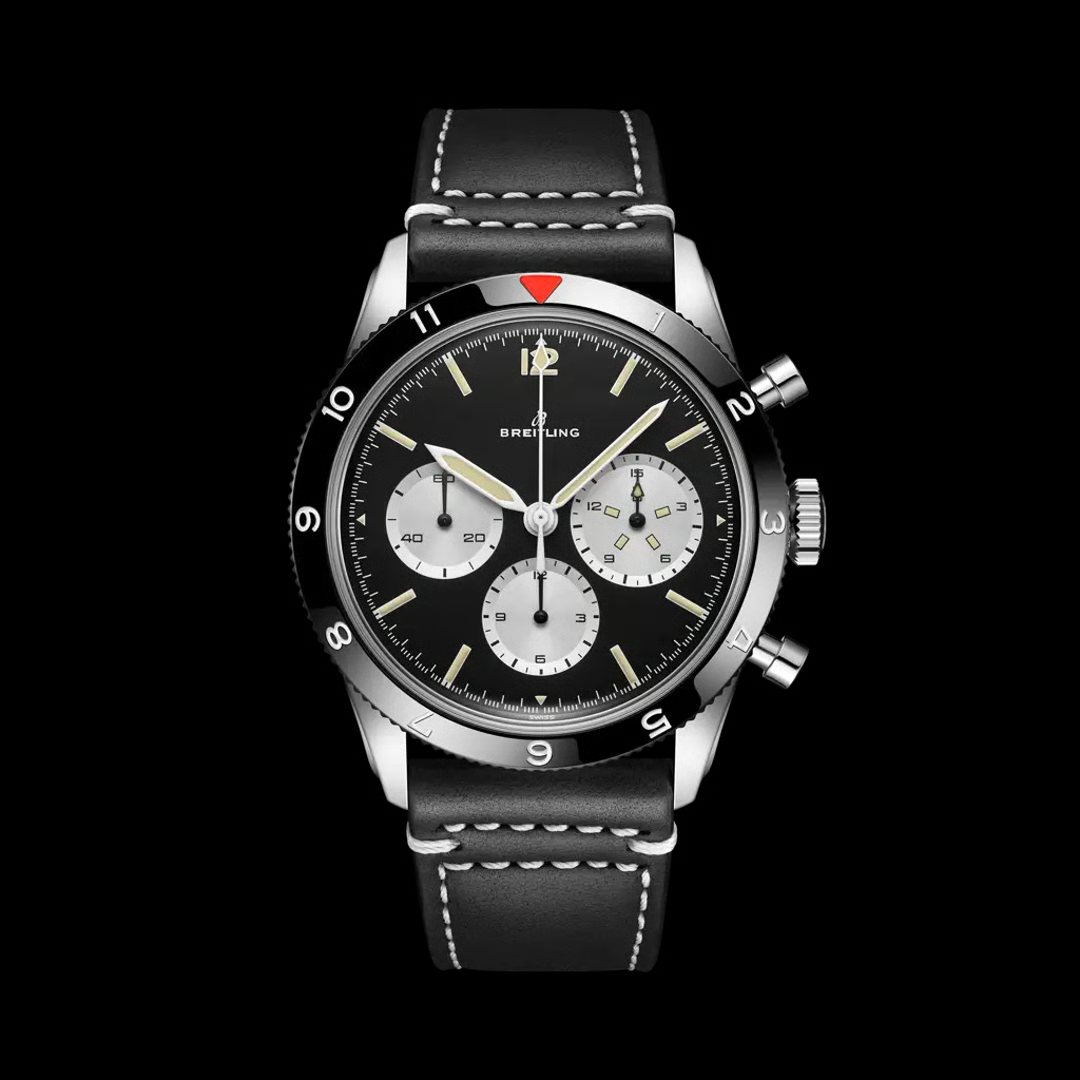
At first glance, the differences may seem small. Look closer, however, and the two watches have very different personalities. The 1953 Re-Edition uses an all-black dial with tone-on-tone counters and a traditional steel bezel. The 1964 Re-Edition switches to a reverse-panda layout, with contrasting light chronograph counters and a black ADLC-coated bezel.
Both are 41mm stainless-steel chronographs powered by Breitling Manufacture Caliber B09, a hand-wound movement with approximately 70 hours of power reserve. Yet their production numbers and visual identities make them appealing to different collectors.
So which one should you buy first? The answer depends on whether you prefer the earlier watch’s understated, historically faithful appearance or the later version’s stronger contrast and distinctive black bezel.
One Co-Pilot, Two Different Eras
The story begins with the Breitling Ref. 765 AVI, introduced in 1953 and commonly associated with the name Co-Pilot. It was designed around the practical needs of pilots, with a highly legible dial, prominent Arabic numerals, a chronograph, and a rotating bezel that could be used for time-related calculations.
It was not the same kind of instrument as the Navitimer. The Navitimer’s circular slide rule was designed for more involved calculations, while the AVI emphasized straightforward time reading and elapsed-time measurement. Its bold dial and uncomplicated visual hierarchy made it easy to recognize.
The design continued to evolve through the following decade. By 1964, the AVI’s appearance had developed into a more graphic chronograph, with contrasting registers and a darker bezel treatment that gave the watch a different visual character.
Breitling’s modern re-editions revisit these two moments rather than treating the Ref. 765 as a single, unchanging design. That distinction is important: the 1953 and 1964 models are related, but each represents a different interpretation of the original aviation watch.
The 1953 Re-Edition: The Purist’s Choice
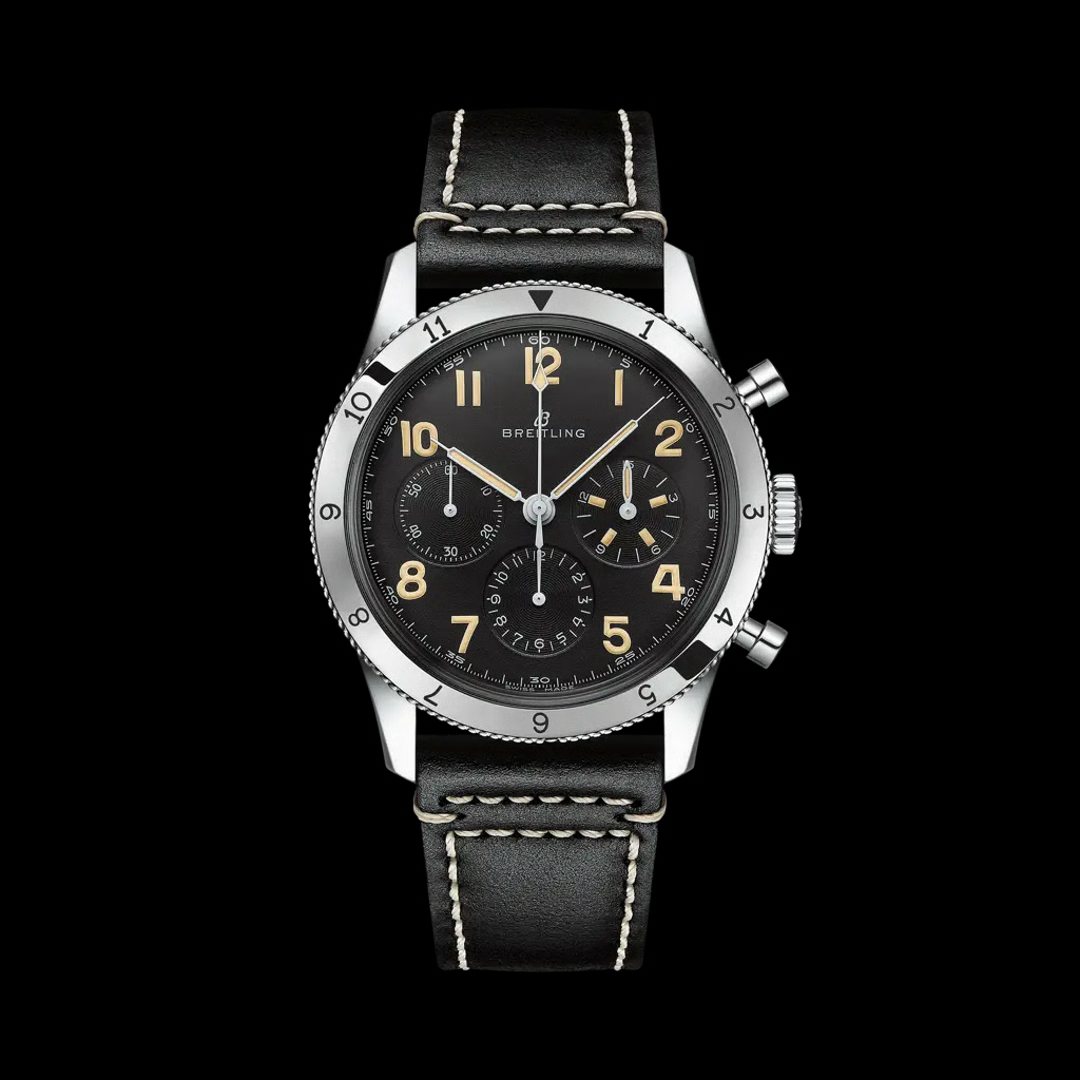
The AVI Ref. 765 1953 Re-Edition is designed to evoke an early execution of the Co-Pilot. Its all-black dial, large Arabic numerals, and tone-on-tone chronograph counters give it a restrained appearance. The counters remain visible without dominating the dial, preserving the sense of a practical instrument.
The stainless-steel bezel is another defining feature. Rather than using the black-coated treatment found on the 1964 model, the 1953 edition retains a traditional metallic appearance. Its bezel construction also reflects the details of the early design, including the placement of the securing screws.
The result is a watch that feels cohesive and deliberately understated. There is no reverse-panda contrast to pull the eye toward the subdials, and no black-coated bezel to visually frame the dial in the same way as the later model.
Collectors who appreciate early chronographs, monochromatic dials, and historically restrained design may find the 1953 edition the more satisfying choice. It is also the natural starting point for someone whose interest in the AVI begins with the original 1953 Co-Pilot.
The steel version was produced in a limited run of 1,953 pieces, with each watch carrying a caseback engraving that identifies it as one of the numbered edition.
The 1964 Re-Edition: A Bolder Interpretation
The AVI Ref. 765 1964 Re-Edition takes the design in a more contrasting direction. Its black dial is paired with light-colored chronograph counters, creating the reverse-panda appearance that gives the watch a more graphic, contemporary presence.
The bezel is another important difference. Instead of the traditional steel look of the 1953 edition, the 1964 model uses a stainless-steel bezel finished with amorphous diamond-like carbon, or ADLC. The coating gives it a black appearance and creates a stronger visual border around the dial.
The dial furniture also differs. The 1964 edition uses baton indexes and pencil-style hands, with vintage-inspired luminous treatment that recalls the look of the period. The overall effect is more contrast-driven than the earlier re-edition without abandoning the AVI’s legibility.
Breitling limited the 1964 Re-Edition to 164 pieces. That number references the year represented by the design, and the caseback is engraved “One of 164.” For collectors who value small production runs, that makes it especially interesting alongside the larger 1953 edition.
Its appeal is not simply that fewer examples exist. The reverse-panda dial and black bezel give it a recognizable identity that is different from the 1953 model, even before the caseback number is considered.
Case and Movement: What They Share
Although their external details differ, the two re-editions share much of their technical foundation. Both use a 41mm stainless-steel case and a domed Hesalite crystal, preserving the vintage character of the original watch.
Both are powered by Breitling Manufacture Caliber B09, a hand-wound chronograph movement developed for historically inspired re-editions. It operates at 28,800 vibrations per hour and offers approximately 70 hours of power reserve.
The B09 uses a column wheel to control the chronograph and a vertical clutch to engage it. These mechanisms are part of the movement’s modern engineering, even though the hand-wound format suits the historical character of the watches.
Manual winding is worth considering before buying either model. You will need to wind the watch through the crown rather than rely on an automatic rotor. For enthusiasts who enjoy interacting with a mechanical watch, this can be part of the appeal. For someone who wants a watch that winds itself while being worn, it may be less convenient.
Both editions have a water-resistance rating of 30 meters. That is modest by modern sports-watch standards, so neither should be treated as a swimming watch. The Hesalite crystal also suits the vintage look but can scratch more readily than sapphire.
Watch Specifications: AVI Ref. 765 1953 Re-Edition
- Model: Breitling AVI Ref. 765 1953 Re-Edition
- Reference: AB0920131B1X1 for the black-dial steel version
- Case material: Stainless steel
- Case diameter: Approximately 41mm
- Dial: Black with tone-on-tone chronograph counters
- Bezel: Bidirectional rotating steel bezel
- Crystal: Domed Hesalite
- Movement: Breitling Manufacture Caliber B09
- Winding: Manual
- Power reserve: Approximately 70 hours
- Frequency: 28,800 vibrations per hour
- Functions: Hours, minutes, small seconds, chronograph with 15-minute and 12-hour counters
- Water resistance: 30 meters / 3 bar
- Limited production: 1,953 pieces for the steel edition
Watch Specifications: AVI Ref. 765 1964 Re-Edition
- Model: Breitling AVI Ref. 765 1964 Re-Edition
- Reference: AB09451A1B1X1
- Case material: Stainless steel
- Case diameter: 41mm
- Case thickness: Approximately 14.05mm
- Dial: Black with contrasting light chronograph counters
- Bezel: Bidirectional ratcheted bezel with black ADLC coating
- Crystal: Domed Hesalite
- Movement: Breitling Manufacture Caliber B09
- Winding: Manual
- Power reserve: Approximately 70 hours
- Frequency: 28,800 vibrations per hour
- Functions: Hours, minutes, small seconds, chronograph with 15-minute and 12-hour counters
- Water resistance: 30 meters / 3 bar
- Limited production: 164 pieces
- Caseback engraving: “One of 164”
Specifications can vary by reference and market listing. Confirm the reference and documentation for the exact watch before purchase.
Which One Has the Stronger Collector Appeal?
The 1953 edition has the more direct connection to the beginning of the Co-Pilot story. Its all-black dial and steel bezel make it the more restrained of the two. For collectors who prioritize the original design language and prefer a monochromatic watch, that may be enough to make the decision.
The 1964 edition is more visually assertive. The light counters stand out against the black dial, and the ADLC-coated bezel gives the watch a different outline. It is also the smaller production run, with 164 pieces compared with 1,953 for the steel 1953 edition.
That difference in production numbers may appeal to collectors who want a more exclusive modern re-edition. However, a lower edition count does not automatically mean a watch is more valuable or a better investment. Condition, originality, demand, service history, and purchase price all influence its desirability on the secondary market.
It is also worth distinguishing rarity from historical importance. The 1953 edition directly references the year of the original Co-Pilot, while the 1964 edition represents a later evolution of the design. A collector who values the beginning of the story may prefer the former; someone drawn to the later aesthetic may prefer the latter.
Which One Should You Buy First?
Buy the 1953 if You Want the Foundation
If this is your first modern AVI Ref. 765, the 1953 edition is the natural entry point. It introduces the essential Co-Pilot design in a relatively restrained form and gives you the clearest connection to the original model’s early identity.
Its monochromatic dial is also versatile. It can feel more understated on the wrist than the reverse-panda 1964, making it appealing to someone who wants a vintage-inspired chronograph without a strong contrast-heavy appearance.
Buy the 1964 if You Prefer Contrast and Scarcity
If you are drawn to reverse-panda chronographs, the 1964 edition may be the more satisfying purchase. Its black dial, contrasting counters, and black-coated bezel give it a distinctive look, while the 164-piece production run makes it the more limited of the two.
It is a compelling choice for a collector who already understands the AVI family and wants a specific variation rather than the earliest re-edition in the series.
Consider Ownership, Not Just the Edition Number
Before deciding, try to see both watches in person if possible. Compare how the dial reads at arm’s length, how the Hesalite crystal looks under different lighting, and how the case and bezel feel on your wrist.
Check service records, the condition of the chronograph, the crystal, the bezel finish, and the completeness of the set. On the 1964 edition, pay particular attention to the condition of the black ADLC coating. On either watch, a low edition number is no substitute for a well-maintained example.
How the 1953 Platinum Edition Fits In
The 1953 re-edition family also includes precious-metal versions. The platinum version pairs a blue dial with a platinum case and was limited to 153 pieces, while the red-gold version was produced in a run of 253 pieces with a black dial.
Those editions are worth considering if the steel versions are not the right fit. Platinum offers a cool, understated precious-metal appearance, while red gold brings a warmer and more traditional luxury character.
For a closer look at the platinum edition, read our guide to the AVI 1953 Platinum, including its limited production, movement, and comparison with the red-gold version.
What Collectors Should Check Before Buying
- Verify the reference. Confirm the exact model and reference number against the paperwork and case details.
- Check the edition number. The steel 1953 edition was limited to 1,953 pieces; the 1964 edition was limited to 164.
- Inspect the dial. Make sure the counters, indexes, hands, and luminous details match the correct version.
- Inspect the bezel. The 1953 model has a steel bezel, while the 1964 version uses a black ADLC-coated bezel. Check for wear or damage to the coating on the latter.
- Assess the Hesalite crystal. Check for scratches, cracks, or other damage.
- Test the chronograph. Confirm that the start, stop, and reset functions operate correctly.
- Ask for service history. A hand-wound chronograph still requires proper maintenance. Request service documentation where available.
- Review the complete set. Original papers, box, strap, buckle, and caseback details can support provenance, although accessories alone do not prove authenticity.
- Be realistic about water resistance. Both models are rated to 30 meters when new. Have the watch tested before any water exposure and avoid treating either as a swimming watch.
Final Thoughts: Two Re-Editions, Two Reasons to Collect
The AVI Ref. 765 1953 and 1964 Re-Editions demonstrate how a single watch family can evolve without losing its identity. Both retain the 41mm steel case, domed Hesalite crystal, and hand-wound Caliber B09. Their differences lie in the details that collectors notice first: dial contrast, bezel finish, and the historical period each represents.
The 1953 edition is the more natural first purchase for someone who wants the foundational Co-Pilot look. The 1964 edition is the choice for someone who prefers a reverse-panda dial, a black-coated bezel, and a much smaller production run.
Neither is universally better. The right choice depends on which design you want to live with, how the watch fits your collection, and the condition of the individual example you find.
If you are building a collection around Breitling’s aviation history, the 1953 is the starting chapter. The 1964 is the next turn of the page.
Watches in this story
Breitling
Breitling AVI Ref. 765 1964 Re-Edition
Ref. AB09451A1B1X1
Call for Pricing
Out of Stock. Call for Pricing
Breitling
Breitling AVI Ref. 765 1953 Re-Edition
Ref. AB0920131B1X1
Call for Pricing
Out of Stock. Call for Pricing
Breitling
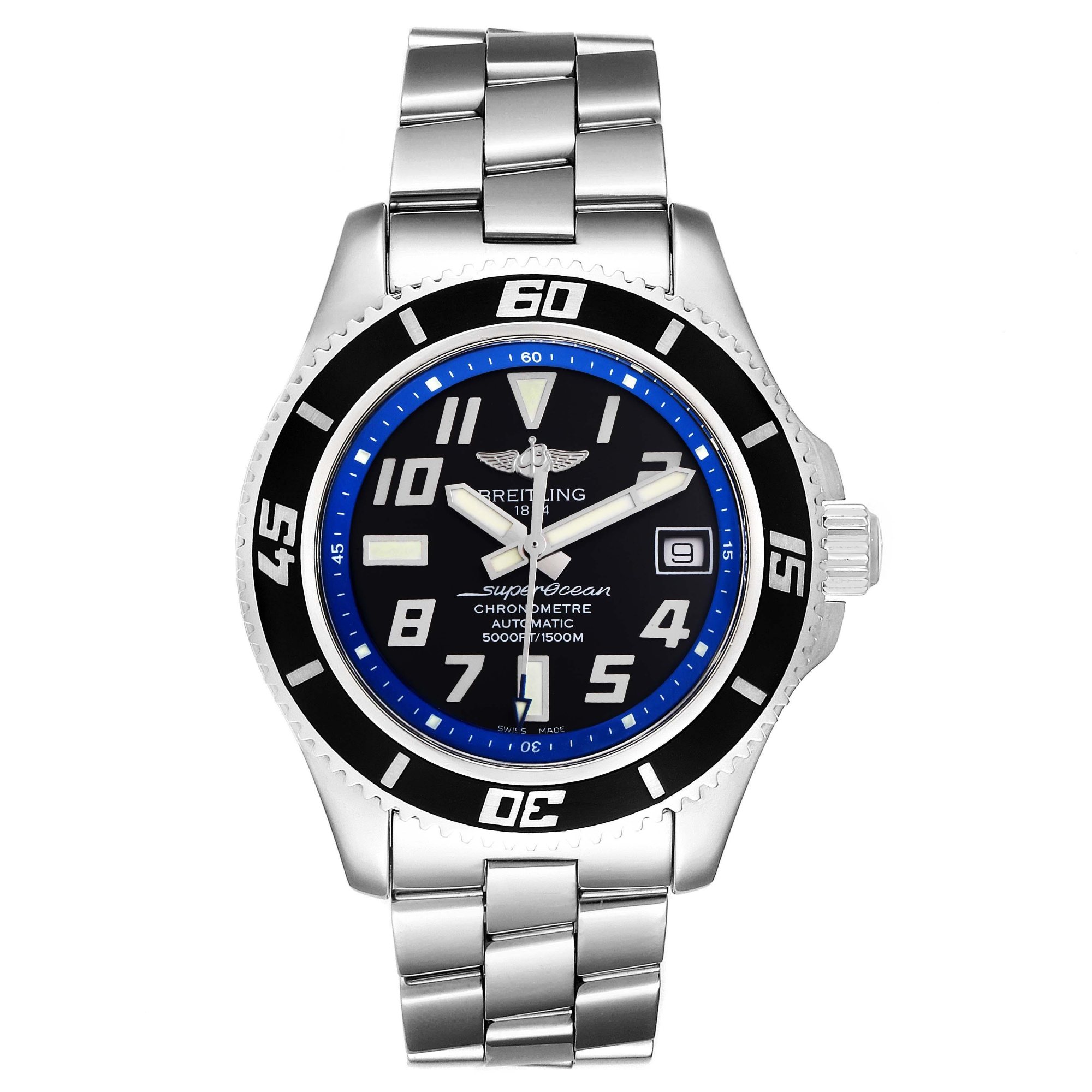
Breitling Superocean 42 ("Abyss Blue", Black/blue dial, Black bezel)
Ref. A17364
$2,285
Not in Stock — Estimated Delivery 3–4 Weeks
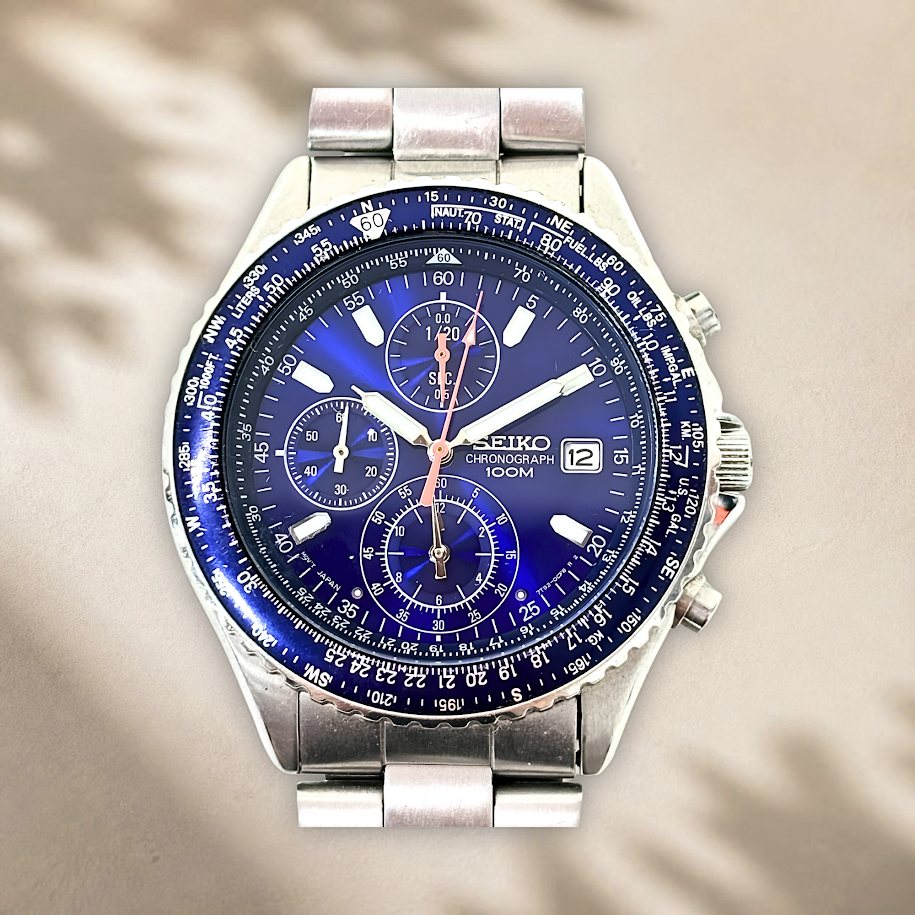
Seiko
Seiko Chronograph 821817 Blue Dial Stainless Steel Watch – Running
Ref. 7T92-0CF0 / SND255
$180
Not in Stock — Estimated Delivery 3–4 Weeks