Blogs / Collector Notes
Breitling AVI 1953 Platinum: Why Only 153 Pieces Exist
11 min read · 11/1/2026
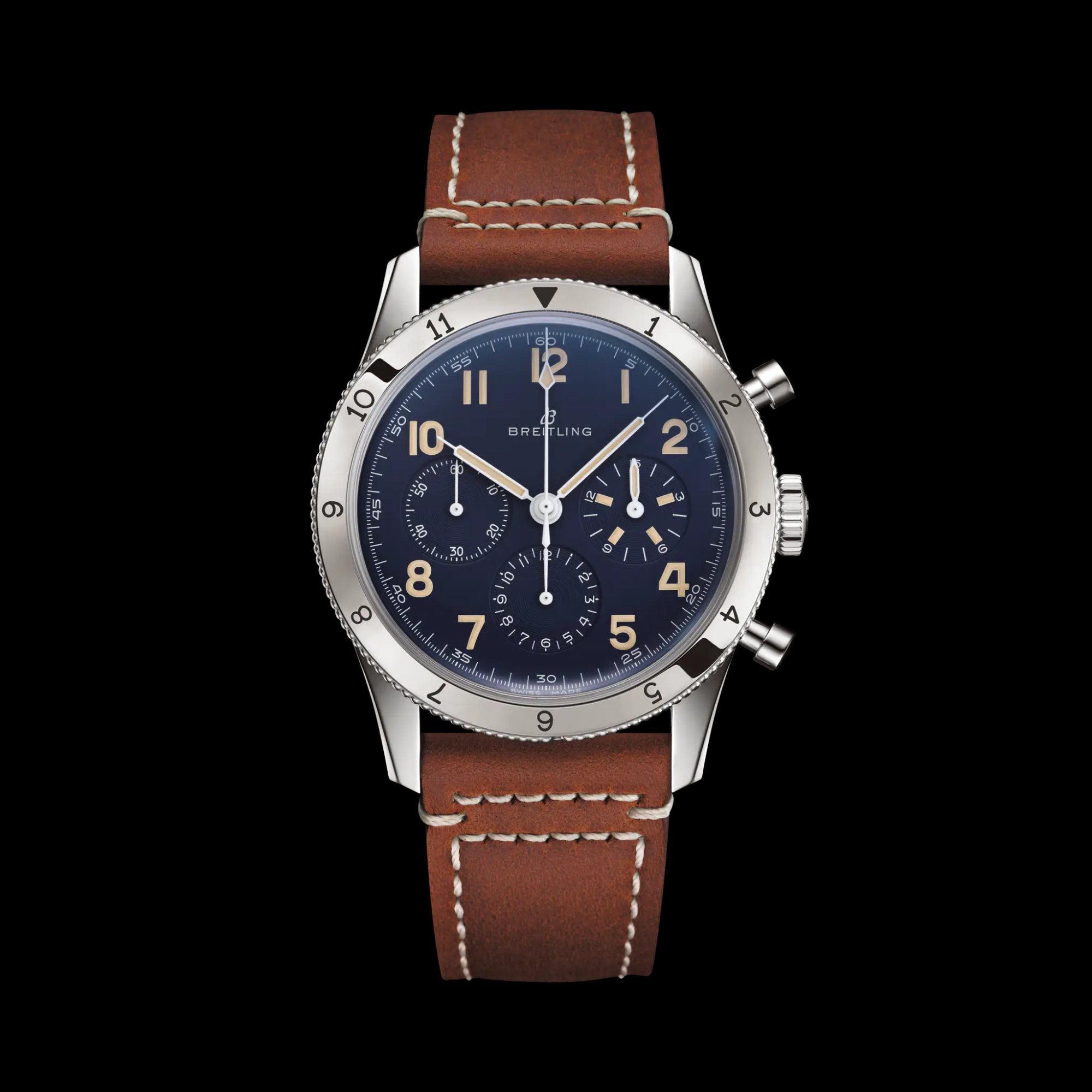
Breitling’s AVI Ref. 765 1953 Re-Edition brings the spirit of a classic pilot’s chronograph into a modern limited edition. The platinum version, limited to 153 pieces, pairs a deep blue dial with a 41mm platinum case and the hand-wound Manufacture Caliber B09. Here’s how its history, precious-metal construction, and rarity distinguish it from the 253-piece red-gold edition.
Breitling AVI 1953 Platinum: Why Only 153 Pieces Exist
There is something special about a watch that does not need a complicated dial or an oversized case to make its presence known. The Breitling AVI Ref. 765 1953 Re-Edition is built around a much older idea: a highly legible pilot’s chronograph designed to be read quickly and used with confidence.
In platinum, that practical aviation design takes on a more exclusive character. Breitling produced the platinum version in a limited run of just 153 pieces, giving it a different appeal from the 253-piece red-gold edition and the 1,953-piece stainless-steel version.
But the platinum AVI is more than a precious-metal variation. It revisits the story of the original Co-Pilot Ref. 765 from 1953, a watch created during an era when aviation chronographs were serious instruments rather than simply expressions of luxury.
For collectors, the attraction lies in that contrast: a historically inspired pilot’s watch, a modern manufacture movement, and a platinum case produced in very small numbers.
The Story Begins in 1953
To understand the AVI 1953 Re-Edition, it helps to look back to the original Breitling Co-Pilot Ref. 765. Introduced in the early 1950s, the watch belonged to a period when aviation was shaping the design of wristwatches. Pilots needed instruments that were legible, dependable, and useful for measuring elapsed time.
The Ref. 765 answered that need with a bold dial, prominent Arabic numerals, a chronograph, and a rotating bezel marked for 12-hour readings. Its design was distinct from the Navitimer, which used a circular logarithmic slide rule for calculations. The Co-Pilot emphasized a different kind of utility: quick time reading and elapsed-time measurement in a straightforward, high-contrast layout.
The original Ref. 765 also appeared in different configurations over its history. Early versions included differences in how elapsed chronograph minutes were displayed. That matters to collectors because the vintage Ref. 765 was not one single, unchanging design.
Breitling’s modern re-edition takes its inspiration from the 1953-era watch and recreates its essential visual language. Large numerals, a rotating bezel, a domed crystal, and a compact set of chronograph counters give it the unmistakable feel of a mid-century pilot’s instrument.
It is a tribute to a specific chapter in Breitling’s history, not an attempt to turn the original into a contemporary sports watch with an entirely new identity.
Why the Number 153 Matters
The platinum edition’s limited production is one of its defining characteristics. Breitling produced just 153 examples of the AVI Ref. 765 1953 Re-Edition in platinum.
The broader collection was released in three principal case materials, each with its own production number:
- Stainless steel: 1,953 pieces.
- 18-karat red gold: 253 pieces.
- Platinum: 153 pieces.
The steel edition’s number references the year that inspired the watch. The two precious-metal editions were produced in smaller quantities, with platinum occupying the most exclusive position by production count.
It is important to get that number right. The platinum model is limited to 153 pieces, not 53. Confusion can arise when limited-edition figures are repeated across secondary listings or shortened in informal discussions. For a collector, the correct number is part of the watch’s provenance and should be verified against reliable documentation.
Does a run of 153 automatically make the platinum edition a better investment? Not necessarily. Limited production can contribute to desirability, but market value also depends on condition, originality, demand, service history, and the price at which a watch is acquired.
Its rarity is best understood as one part of the story rather than a guarantee of future appreciation.
Platinum: A Different Kind of Luxury
The platinum case changes the personality of the AVI without changing its fundamental purpose. The watch retains the bold proportions and instrument-like layout of the original design, but the case material introduces a quieter form of luxury.
Unlike the warm glow of red gold, platinum has a naturally pale, cool appearance. It allows the deep blue dial to take center stage while giving the watch a substantial, understated presence. Platinum is also dense, so a platinum watch can feel noticeably heavier than a similarly sized steel model.
That weight is part of the experience for some collectors. Others may prefer the lighter feel of stainless steel or the warmth of red gold. None of these materials is universally better; they offer different combinations of appearance, feel, maintenance considerations, and personal appeal.
The platinum AVI is particularly interesting because Breitling did not abandon the original watch’s visual restraint. The case is precious, but the design remains recognizably utilitarian. The result is a pilot’s chronograph that feels luxurious without losing its connection to aviation instrumentation.
For someone who already owns steel sports watches, the platinum edition offers a different tactile and visual experience. For a collector who wants a historically inspired Breitling in a precious metal, it is a distinctive alternative to the more familiar Navitimer.
The Blue Dial and Vintage Details
The platinum version is distinguished by its blue dial. Against the cool tone of the case, the dial gives the watch depth without overwhelming its highly legible layout.
Large Arabic numerals dominate the display. The hands and hour markers use a deliberately vintage-inspired luminous color, recalling the aged appearance associated with older watches while using modern Super-LumiNova rather than the original radium-based luminous materials.
The rotating bezel carries a 12-hour scale, reinforcing the watch’s practical aviation character. Its domed Hesalite crystal also contributes to the vintage appearance, with a profile that differs from the flatter sapphire crystals common on many contemporary sports watches.
The chronograph layout remains functional and restrained. The watch displays running seconds alongside a 15-minute counter and a 12-hour chronograph totalizer. There is no date window interrupting the dial, which keeps the display faithful to the clean, instrument-focused aesthetic.
The platinum case is paired with a gold-brown leather strap and a precious-metal buckle. That combination softens the cool appearance of the case and gives the watch a warmer accent without competing with the blue dial.
Inside the Watch: Manufacture Caliber B09
One of the strongest features of the AVI 1953 Re-Edition is its movement. Breitling fitted the watch with Manufacture Caliber B09, a manually wound chronograph movement based on the brand’s modern B01 architecture.
The hand-wound design suits the historical inspiration. Instead of relying on an automatic rotor, the wearer winds the watch through the crown, making interaction with the movement part of the daily experience.
Caliber B09 uses a column wheel to control the chronograph and a vertical clutch to engage it. These are established chronograph mechanisms valued for their controlled operation. The movement is also COSC-certified, meaning it has passed the relevant Swiss chronometer precision tests.
Its power reserve is approximately 70 hours when fully wound. That is a useful amount of autonomy for a mechanical chronograph, particularly for collectors who rotate between several watches.
The movement combines modern manufacture engineering with a hand-wound format that feels appropriate to the watch’s historical inspiration. It is not the original 1953 movement reproduced unchanged; it is a contemporary caliber chosen to power a modern re-edition.
Watch Specifications
- Model: Breitling AVI Ref. 765 1953 Re-Edition
- Platinum reference: LB0920131C1X1
- Collection: AVI / Classic AVI
- Inspiration: Breitling Co-Pilot Ref. 765 from 1953
- Case material: Platinum
- Case diameter: Approximately 41mm
- Case thickness: Approximately 14.05mm, according to Breitling's published specification
- Dial: Blue
- Crystal: Domed Hesalite / Plexiglas
- Movement: Breitling Manufacture Caliber B09
- Winding: Manual
- Chronograph mechanism: Column wheel and vertical clutch
- Frequency: 28,800 vibrations per hour
- Power reserve: Approximately 70 hours
- Certification: COSC-certified chronometer
- Functions: Hours, minutes, small seconds, chronograph with 15-minute and 12-hour counters
- Bezel: Bidirectional rotating bezel with 12-hour scale
- Water resistance: 30 meters / 3 bar
- Strap: Gold-brown leather with a platinum-associated precious-metal buckle
- Limited production: 153 pieces
As with any limited-edition watch, the exact reference, accessories, and condition should be confirmed for the individual example being considered. The specifications above describe the platinum version, not the steel or red-gold variants.
Platinum vs. Red Gold: Two Different Personalities
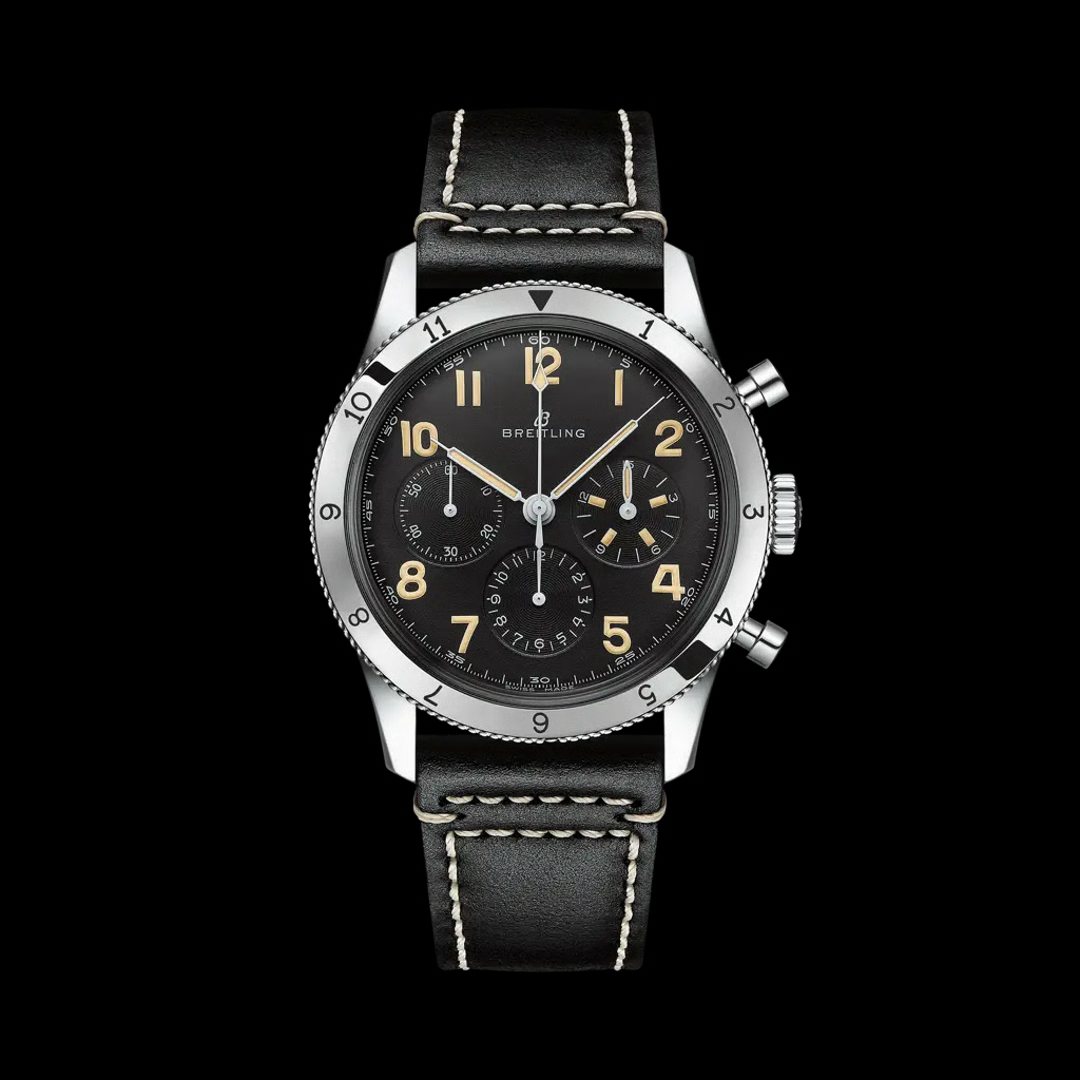
The red-gold AVI 1953 Re-Edition was limited to 253 pieces and features a black dial. The platinum model was limited to 153 pieces and uses a blue dial. Both share the same basic design and Manufacture Caliber B09, but the material and dial combination gives each version a different character.
The Platinum Edition
The platinum model is the choice for someone who prefers a cooler, more understated look. Its blue dial and pale case create a restrained contrast, while the lower production count gives it the smaller edition size of the two precious-metal versions.
Platinum's density also gives the watch a reassuring weight on the wrist. For collectors who appreciate the material itself, that tactile difference is part of the appeal.
The Red-Gold Edition
The red-gold version takes a warmer and more traditional luxury approach. Its black dial creates a strong contrast against the gold case, and its brown leather strap complements the case material.
With 253 examples produced, it is less limited than the platinum edition but remains a scarce model compared with the steel version. Its appeal may be stronger for collectors who enjoy the visual warmth of precious gold and the classic combination of a dark dial with a gold case.
Which One Makes More Sense?
For the collector who prioritizes the smallest production run and prefers a cooler aesthetic, platinum has the advantage. For someone drawn to warmth and a more traditional precious-metal appearance, red gold may be the more satisfying choice.
Neither material guarantees better long-term performance in the secondary market. The condition of the watch, its originality, completeness, provenance, and purchase price remain essential considerations.
Who Should Buy the Platinum AVI 1953?
The platinum AVI makes the most sense for a collector who already appreciates Breitling's aviation heritage and wants something less common than a steel Navitimer or standard chronograph.
It is especially appealing to someone who values the original Ref. 765 design, prefers a hand-wound movement, and enjoys the substantial feel of platinum. The blue dial gives it a distinctive identity, while the 153-piece production run makes it a specialized addition to a collection.
It may be less suitable for someone looking for a carefree everyday watch. The Hesalite crystal can scratch more easily than sapphire, and the precious-metal case deserves sensible care. Its 30-meter water-resistance rating is also modest, so it should not be treated as a watch for swimming or water sports.
A steel version may be more practical for regular use, while the red-gold edition offers a warmer precious-metal alternative. The platinum model is for the buyer who specifically wants this combination of heritage, material, dial color, and limited production.
What Collectors Should Check Before Buying
- Confirm the reference. The platinum version is reference LB0920131C1X1. Check the watch's documentation and case details.
- Verify the edition number. The platinum series was limited to 153 pieces. Check the caseback engraving and available paperwork.
- Inspect the platinum case. Look for dents, excessive polishing, softened edges, and signs of previous repairs.
- Check the dial and hands. Confirm that the blue dial, luminous details, and hands match the correct platinum configuration.
- Inspect the Hesalite crystal. Small scratches may be manageable, but deep damage should be assessed before purchase.
- Test the chronograph. All chronograph functions should start, stop, and reset correctly. A qualified watchmaker should assess mechanical condition.
- Ask about service history. A modern manufacture movement still requires proper maintenance. Request records and budget for service if the history is unknown.
- Check the accessories. Original box, papers, strap, buckle, and supporting documentation can help establish completeness and provenance.
- Do not assume water resistance. The original specification is 30 meters, but seals age. Have the watch inspected before any exposure to water.
Final Thoughts: A Rare AVI With a Clear Identity
The Breitling AVI Ref. 765 1953 Re-Edition in platinum succeeds because it understands what made the original design compelling. It keeps the legible dial, rotating 12-hour bezel, and purposeful chronograph layout while introducing modern movement technology and a precious-metal case.
The production number is worth remembering: 153 platinum examples, compared with 253 in red gold and 1,953 in steel. That makes the platinum version the smallest of the three runs, but rarity is only one part of its appeal.
The real attraction is the combination of a deep blue dial, the weight and understated look of platinum, a hand-wound manufacture chronograph, and a design rooted in Breitling's aviation history.
For a collector who wants a modern Breitling with vintage character and a more exclusive identity than the familiar steel pilot's watch, the platinum AVI is a compelling choice.
Not because it is simply rare, but because every major decision—from the case material to the dial and movement—supports the character of the watch.
Watches in this story
Breitling
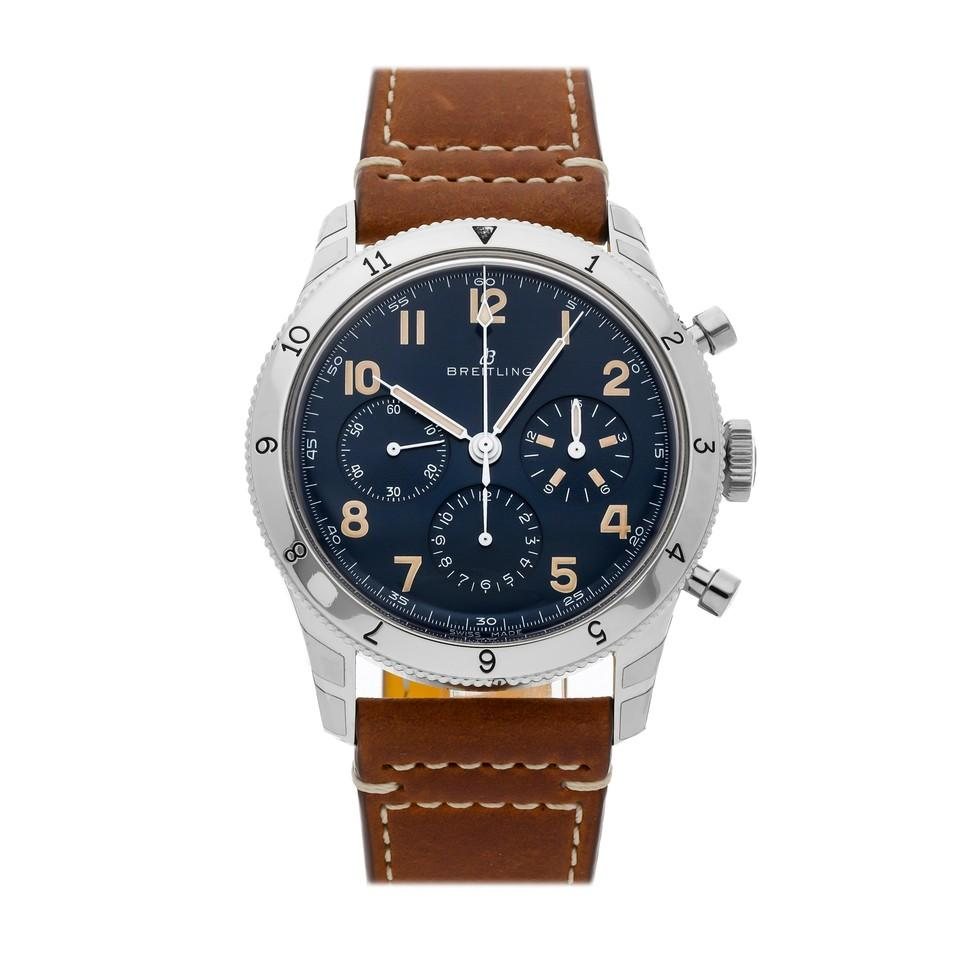
Breitling AVI 1953 Edition (Platinum)
Ref. LB0920131C1X1
Call for Pricing
Out of Stock. Call for Pricing
Breitling
Breitling AVI Ref. 765 1953 Re-Edition
Ref. AB0920131B1X1
Call for Pricing
Out of Stock. Call for Pricing
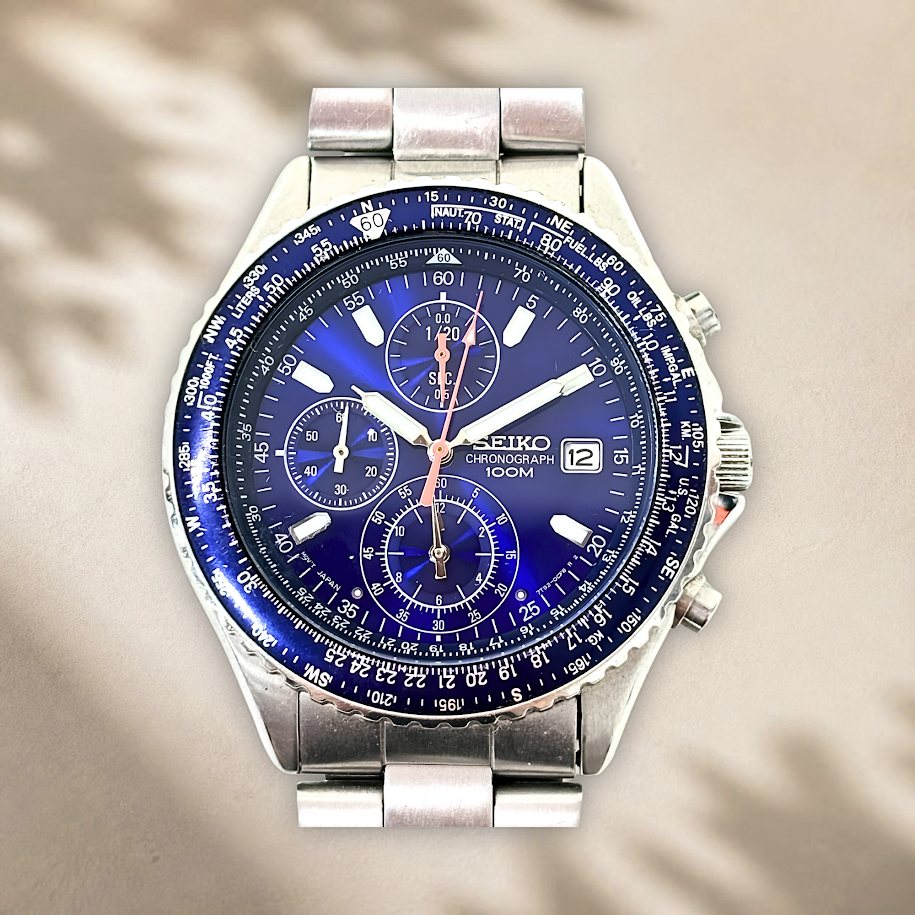
Seiko
Seiko Chronograph 821817 Blue Dial Stainless Steel Watch – Running
Ref. 7T92-0CF0 / SND255
$180
Not in Stock — Estimated Delivery 3–4 Weeks