Blogs / Collector Notes
Breitling Navitimer Olympus: The Complicated Pilot's Watch With a Four-Year Calendar
6 min read · 10/24/2026
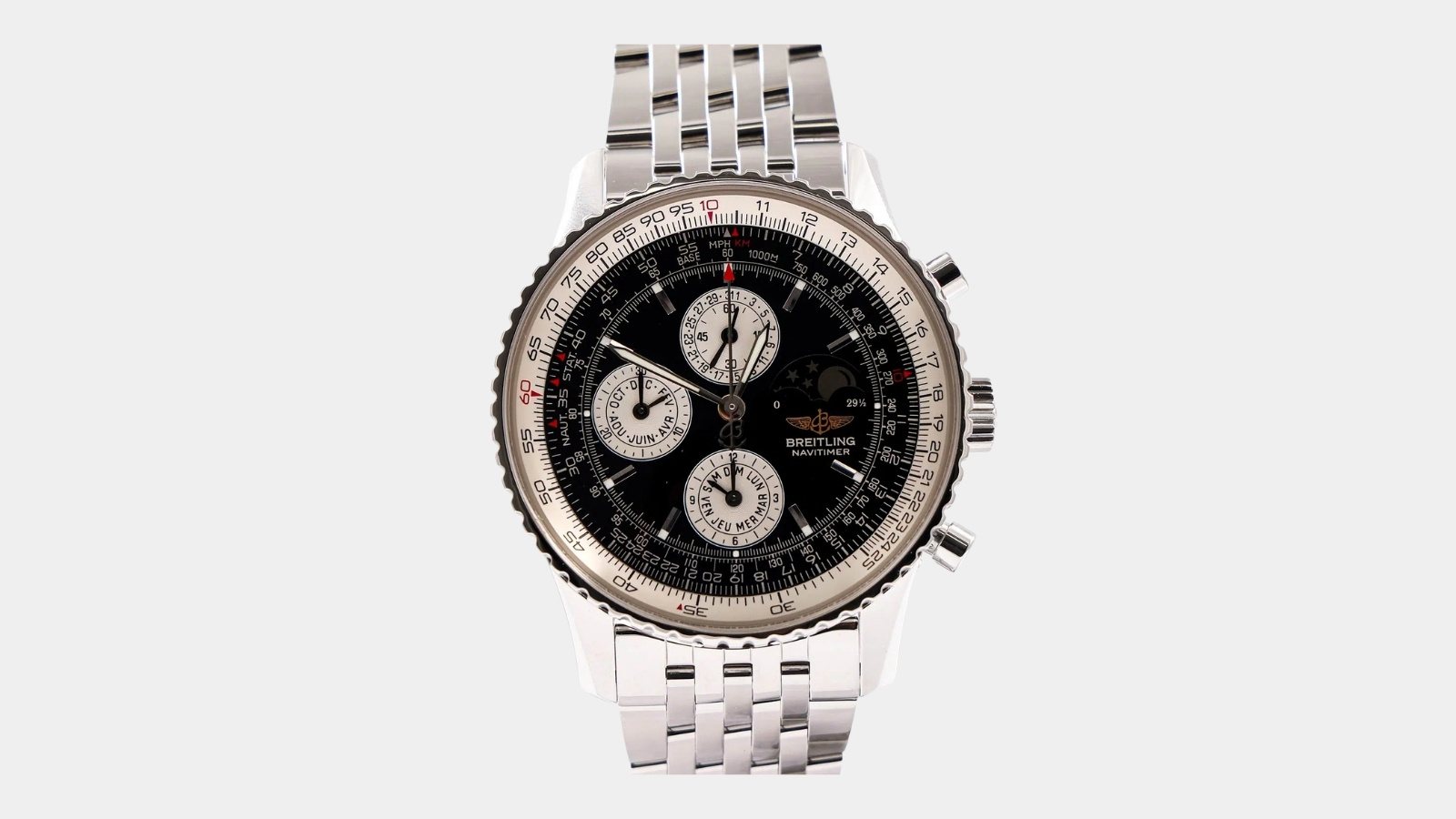
The Breitling Navitimer Olympus ref. A19340 combines the iconic aviation slide rule with an automatic chronograph, four-year calendar, and moon-phase display. Produced from 2002 to 2005, this sophisticated model stands out for its information-rich dial and Breitling Caliber 19, offering a more complicated interpretation of the classic Navitimer.
A Navitimer Built for More Than Flying
The Breitling Navitimer is one of the most recognizable pilot's watches ever made. Its circular slide rule, chronograph registers, and technical dial have defined the collection since its introduction in 1952. But Breitling's history also includes more complicated versions designed for enthusiasts who want additional mechanical functions without losing the Navitimer's aviation identity.
One of the most distinctive examples is the Breitling Navitimer Olympus ref. A19340. Produced from 2002 to 2005, the Olympus combines an automatic chronograph with a four-year calendar and moon-phase display. Its numerous hands and indications create a particularly information-rich dial, giving the traditional Navitimer a more sophisticated personality.
The Olympus is a reminder that Breitling's aviation heritage is not limited to timing flights. It also includes the challenge of bringing several useful indications together in one mechanical instrument.
The Navitimer Heritage
Willy Breitling developed the Navitimer in 1952 following an approach from the Aircraft Owners and Pilots Association, or AOPA. The goal was to create a wrist-worn instrument that could help pilots perform calculations such as average speed, distance, fuel consumption, and unit conversions.
The solution combined a chronograph with a rotating logarithmic slide rule. This distinctive arrangement made the Navitimer immediately recognizable and established its identity as a technical aviation watch.
The Olympus retains that essential design language but adds a calendar complication and moon-phase display. The result is a watch that looks like a Navitimer at first glance while offering considerably more information than a conventional chronograph.
What Makes the Olympus Different?
The Olympus stands out because of its combination of functions. Alongside the standard time display and chronograph, the watch presents the day, date, month, and phase of the moon. The four-year calendar is designed to account for the different lengths of months across a four-year cycle, including leap years.
Unlike a true perpetual calendar, which is designed to handle the Gregorian calendar's leap-year pattern through 2100 without routine correction, the Olympus's four-year calendar requires adjustment at the appropriate leap-year interval. This is an important distinction when comparing it with newer high-complication watches.
The additional indications make the dial visually complex, but that complexity is part of the Olympus's appeal. It offers the technical personality of the Navitimer while serving collectors who appreciate calendar mechanics and astronomical displays.
Breitling Caliber 19
Powering the Navitimer Olympus is Breitling Caliber 19, an automatic chronograph movement based on the ETA 2892-A2 architecture with an additional calendar and chronograph mechanism.
Specialist references describe the movement as chronometer-certified and identify a power reserve of approximately 42 hours. The caliber brings the watch's timekeeping, chronograph, calendar, and moon-phase indications together in one mechanical system.
- Movement: Breitling Caliber 19
- Winding: Automatic
- Base architecture: ETA 2892-A2 family, with additional complications
- Power reserve: Approximately 42 hours
- Frequency: 28,800 vibrations per hour
- Certification: Chronometer-certified according to specialist references
- Functions: Hours, minutes, small seconds, chronograph, day, date, month, four-year calendar, moon phase, and circular slide rule
The Caliber 19 is central to the Olympus's identity. Rather than relying on the chronograph alone, the movement supports a broader set of calendar functions while preserving the practical timing features expected of a Navitimer.
Case Dimensions and Wrist Presence
The Navitimer Olympus ref. A19340 uses a stainless-steel case measuring approximately 43 mm in diameter and 15.3 mm thick. These dimensions give the watch a substantial presence on the wrist, consistent with its crowded dial and multiple complications.
The bidirectional rotating bezel carries the circular aviation slide rule, while the sapphire crystal protects the dial. Specialist references list water resistance at 30 metres, so the Olympus should be treated as a complicated chronograph rather than a watch intended for swimming or diving.
- Reference: A19340
- Production period: 2002–2005
- Case material: Stainless steel
- Diameter: Approximately 43 mm
- Thickness: Approximately 15.3 mm
- Crystal: Sapphire
- Bezel: Bidirectional rotating slide rule
- Water resistance: 30 metres, according to specialist references
- Bracelet: Navitimer steel bracelet or compatible strap configuration, depending on the example
Because this is a vintage-era model, buyers should confirm the actual dimensions, configuration, and condition of the individual watch. Original specifications and accessories should be checked against the full reference and available documentation.
Navitimer Olympus vs. Montbrillant Olympus
Breitling also produced the related Montbrillant Olympus, reference A19350, from approximately 2006 to 2010. The two models share the Caliber 19 complication concept, but they should not be treated as the same reference.
The Navitimer Olympus A19340 is generally listed at approximately 43 mm, while the Montbrillant Olympus A19350 measures about 42.1 mm. The Montbrillant's case and dial styling reflect its own place within Breitling's historical-inspired collection.
Collectors researching either model should pay attention to the complete reference number. Listings may use the word “Olympus” prominently, but the model family and reference determine which case, dial, and specifications apply.
The Dial: A Mechanical Information Center
The Olympus dial is busy by design. The chronograph registers share space with calendar indications, while the moon-phase display adds another layer of visual detail. The circular slide rule continues around the outer dial, maintaining the Navitimer's signature appearance.
For collectors who enjoy complicated mechanical watches, the dial is part of the attraction. Each display represents a different function, and the challenge is fitting them into a layout that remains recognizable as a Navitimer.
When examining a pre-owned example, look for consistent printing, correct hands, legible calendar indications, and a properly functioning chronograph. Dial originality is particularly important on vintage watches, where refinishing or replacement parts can affect both authenticity and collector interest.
What Collectors Should Check
The Olympus offers more mechanical functions than a standard chronograph, so a careful inspection is essential before purchase.
- Reference identification: Confirm that the watch is the Navitimer Olympus A19340 rather than the Montbrillant Olympus A19350.
- Calendar operation: Verify that the day, date, month, and leap-year cycle operate and display correctly.
- Moon phase: Check that the display advances properly and can be set according to the manufacturer's instructions.
- Chronograph: Test start, stop, and reset functions.
- Movement condition: Request service records and consider inspection by a watchmaker familiar with complicated Breitling movements.
- Case and dial: Look for excessive polishing, corrosion, refinishing, or replacement components.
- Accessories: Verify the bracelet or strap, clasp, box, and paperwork where supplied.
Calendar complications require particular care when setting. Follow the appropriate instructions rather than adjusting displays without understanding the mechanism's restrictions. A professional inspection can help identify issues that may not be visible in photographs.
Final Thoughts: A Different Side of the Navitimer
The Breitling Navitimer Olympus ref. A19340 is a compelling example of the collection's more complicated side. Its automatic chronograph, four-year calendar, moon-phase display, and aviation slide rule combine several functions in a distinctive early-2000s design.
Produced from 2002 to 2005, the Olympus offers an alternative to the familiar three-register Navitimer. It is especially appealing to enthusiasts who value calendar mechanics and a dense, instrument-like dial.
For collectors, the key is understanding exactly which Olympus they are buying, verifying the movement and calendar functions, and prioritizing originality and service history. The Olympus may not be the most straightforward Navitimer, but its complexity is precisely what makes it memorable.
Watches in this story
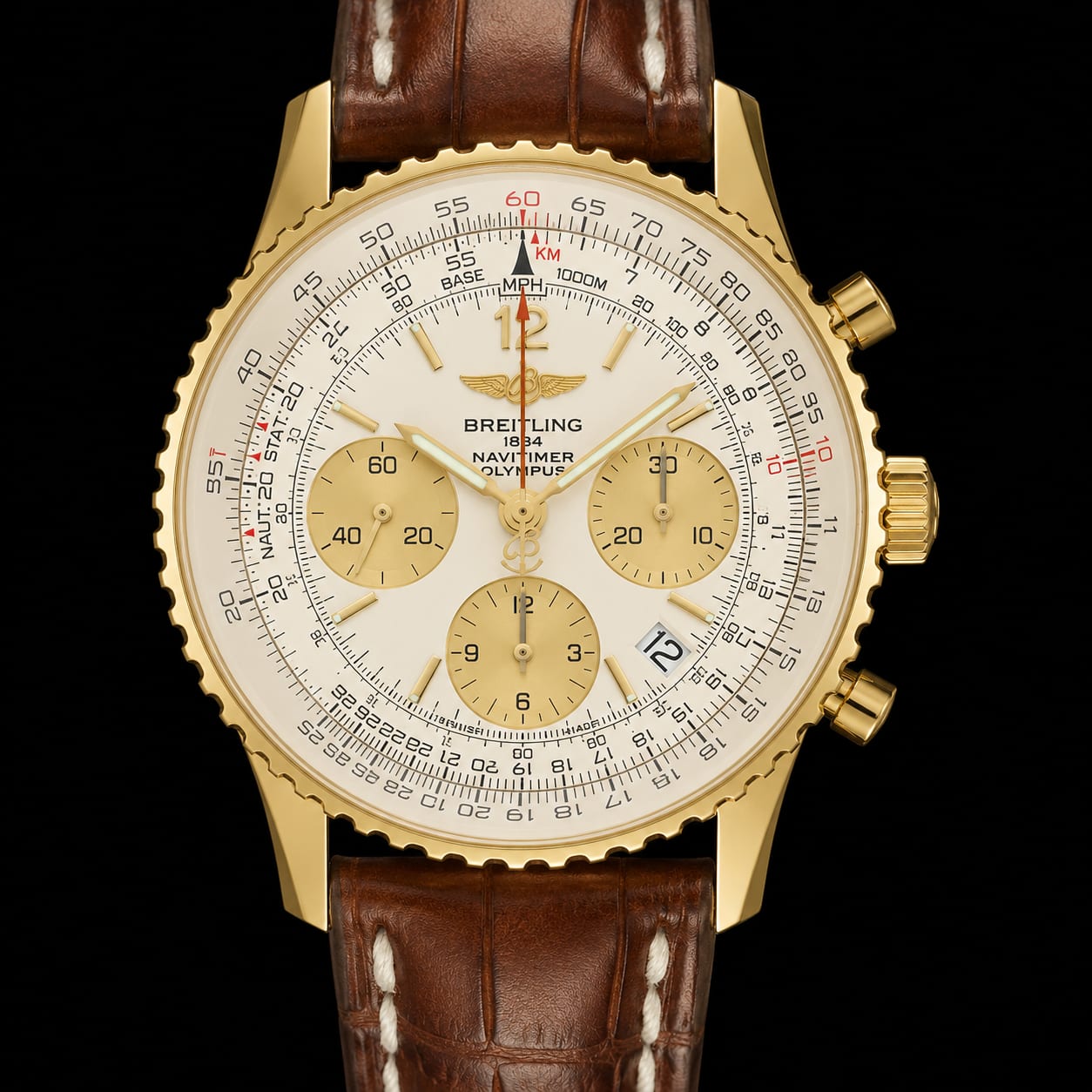
Breitling
Breitling Navitimer Olympus
2003 • Very Good
$18,000
Not in Stock — Estimated Delivery 3–4 Weeks
Breitling
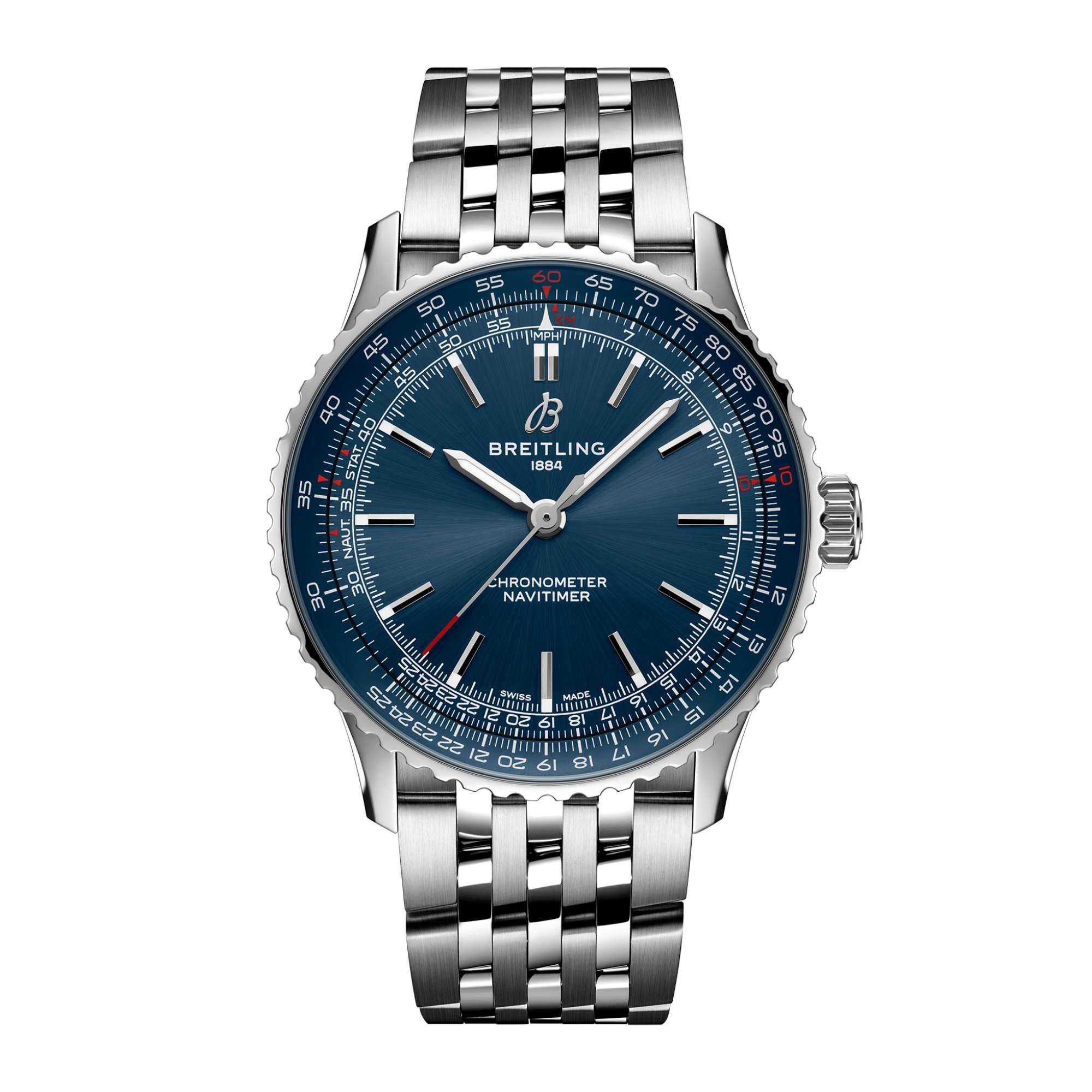
Breitling Navitimer Automatic 41 Automatic Stainless Steel
Ref. A17329
$3,990
Not in Stock — Estimated Delivery 3–4 Weeks