Blogs / Collector Notes
Navitimer GMT 41 Samurai: The 100-Piece Japan Edition
10 min read · 11/3/2026
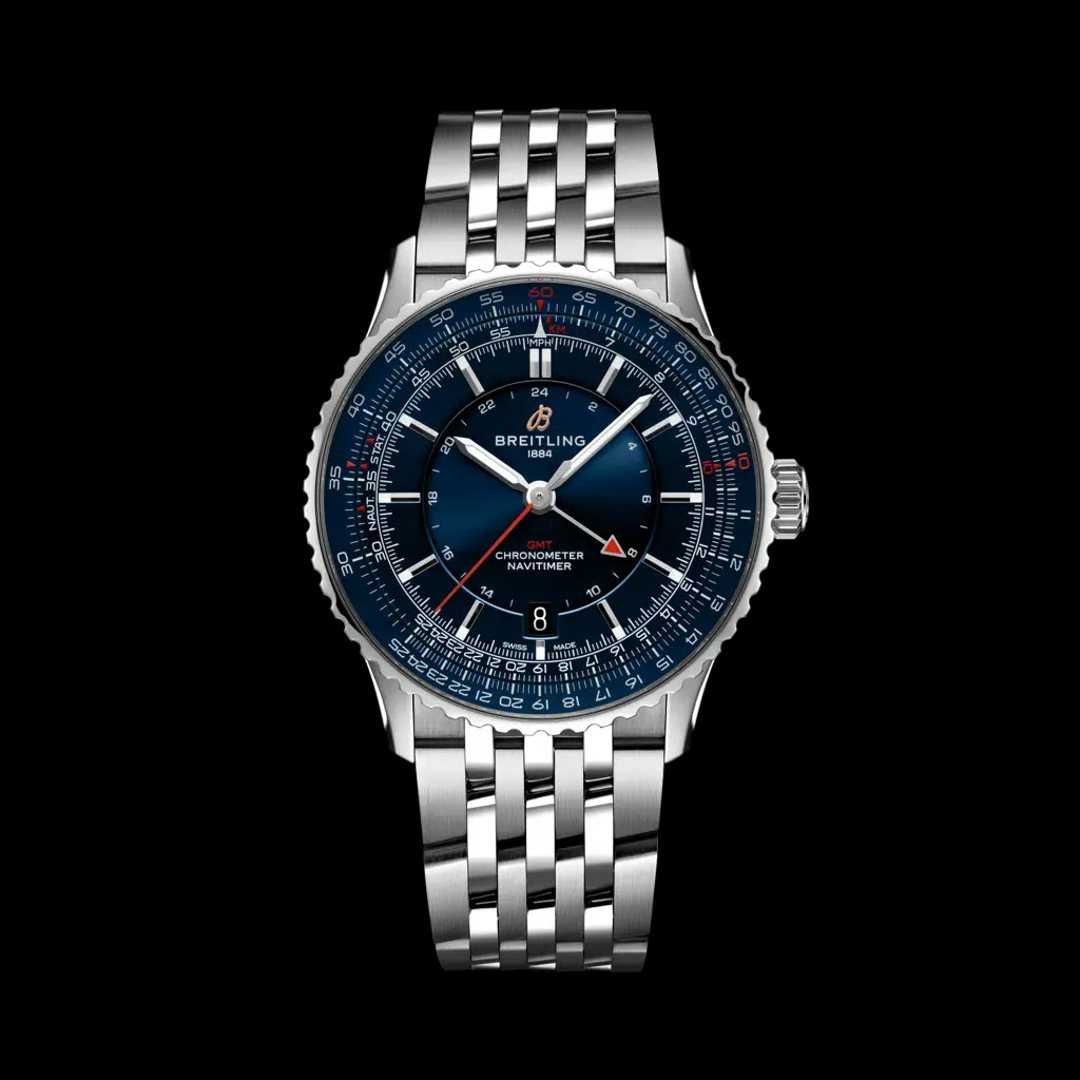
Breitling’s Navitimer Automatic GMT 41 Samurai Japan Limited Edition brings aviation-watch heritage into the world of Japanese baseball. Limited to 100 pieces for Japan, it combines an indigo dial, red GMT hand, and commemorative caseback with a practical automatic GMT movement. We examine the story behind the edition, verify its specifications, and compare it with the standard Navitimer B01 Chronograph 41.
Navitimer GMT 41 Samurai: The 100-Piece Japan Edition
Some limited-edition watches rely on a different dial color and a number engraved on the caseback. Others have a story that makes those details feel genuinely connected to the watch itself. The Breitling Navitimer Automatic GMT 41 Samurai Japan Limited Edition belongs in the second conversation.
Created for the Japanese market in a run of just 100 pieces, this Navitimer celebrates Samurai Japan, the country's national baseball team. Its Japanese-indigo dial, vivid red GMT hand, and commemorative caseback give the familiar aviation watch a distinctly regional identity. Underneath, Breitling Caliber 32 provides an automatic second-time-zone function rather than a chronograph.
That last detail is important. The Samurai Japan edition may share the Navitimer's recognizable slide-rule bezel and 41mm steel case with other members of the family, but it serves a different purpose from the classic Navitimer chronograph. Understanding that distinction makes this limited edition more interesting than its production number alone suggests.
Why Japan Gets Exclusive Breitling Watches
Japan has a long-established luxury-watch market and a collecting culture that appreciates both established Swiss watchmaking and carefully differentiated special editions. For a manufacturer with a recognizable design language, a regional release can connect an existing model with a particular audience without requiring an entirely new watch architecture.
That is the appeal of a good regional edition. The underlying watch remains familiar, but a specific color combination, commemorative detail, or partnership gives it a separate identity. It becomes a recognizable member of the collection with a story that cannot simply be transferred to every standard version.
The Samurai Japan Navitimer follows this approach. Breitling retains the circular aviation slide rule and established GMT platform, then introduces colors and caseback details associated with the Japanese national baseball team. The result is not a completely new Navitimer. It is a carefully differentiated interpretation of an existing one.
Regional exclusivity also creates a collecting distinction. The edition is intended for Japan and limited to 100 pieces, so collectors outside that market may encounter it less often than a regular-production Navitimer. That scarcity is real, but it should not be confused with a guarantee of future price appreciation.
Samurai Japan: The Story Behind the Watch
Samurai Japan represents Japan in international baseball competition. The team identity gives Breitling a subject beyond aviation, and the watch translates that connection through color, branding, and a numbered commemorative caseback.
The dial uses Japanese indigo, a deep blue that provides a distinctive alternative to the more familiar dial treatments found throughout the Navitimer family. The red GMT hand supplies the contrast. Breitling connects that red to the Hinomaru, Japan's national flag, giving a functional display element a symbolic role as well.
Turn the watch over and the collaboration becomes more explicit. The caseback carries the SAMURAI JAPAN emblem and the inscription “ONE OF 100.” The specially branded presentation box extends the theme, with its brown, leather-inspired appearance recalling a baseball glove.
These details are more meaningful than a generic limited-edition inscription. They identify the watch with a particular team and market, giving collectors a reason to seek out this version specifically rather than another Navitimer GMT with a similar case and movement.
The Indigo Dial and Red GMT Hand
The visual strength of this edition comes from restraint. The indigo dial changes the character of the watch without removing the Navitimer's signature circular scales. It looks special, but it remains recognizably part of Breitling's aviation-watch family.
The red GMT hand is the key visual accent. It separates the second-time-zone indication from the main time display and reinforces the Japanese national colors behind the collaboration. It is an example of a design detail doing two jobs: improving legibility and strengthening the story.
The circular slide rule remains around the dial, preserving the technical appearance that has defined the Navitimer since its introduction in 1952. Historically, the scale allowed pilots to perform calculations using the watch. Today, some owners may use it for practical conversions, while others value it primarily as the collection's defining visual feature.
For a collector, the combination is the point. The Samurai Japan edition is not simply a blue Navitimer. It combines the aviation-inspired slide rule, a useful GMT complication, and an identity tied to Japanese baseball.
Caliber 32: A GMT Built for Two Time Zones
Inside the 41mm case is Breitling Caliber 32, a self-winding mechanical movement that displays a second time zone in 24-hour format. The official specification lists 25 jewels, a frequency of 28,800 vibrations per hour, and an approximate 42-hour power reserve. It is also COSC-certified as a chronometer.
The practical advantage is straightforward: the wearer can keep track of another time zone while reading local time from the main hands. That is useful when travelling, communicating with colleagues abroad, following international events, or maintaining a connection with home while away.
The red GMT hand is the visual cue for the additional time zone. It works with the 24-hour scale to distinguish that indication from the ordinary hour hand. The dial also includes a date display, while the bidirectional rotating bezel retains the Navitimer's circular slide rule.
One point deserves emphasis: this is an automatic GMT, not an automatic chronograph. Caliber 32 is designed around timekeeping and the second time zone, not elapsed-time measurement. That changes the dial layout and the way the watch is used.
Navitimer GMT 41 vs. Navitimer B01 Chronograph 41
For a meaningful comparison, it helps to use a specific reference rather than an undefined “standard Navitimer.” The Samurai Japan bracelet model, reference A323103A1C1A1, can be compared with the Navitimer B01 Chronograph 41, reference AB0139211L1A1.
Both use stainless steel, a 41mm case, a bidirectional slide-rule bezel, and a sapphire crystal with anti-reflective treatment on both sides. Both have 30-meter water resistance. Their dimensions, movements, and functions, however, reveal two different approaches to the Navitimer.
GMT: A Second Time Zone
The Samurai Japan model uses Caliber 32, offers approximately 42 hours of power reserve, and measures 11.65mm thick. Its central GMT hand provides a second-time-zone display, while the main hands show local time. The date is displayed through an aperture.
The absence of chronograph subdials gives the GMT a less crowded appearance. For someone who regularly tracks two locations, that function may be more useful than a stopwatch. The indigo dial and red GMT hand also make the Samurai Japan edition visually distinct from a regular-production model.
Chronograph: Elapsed-Time Measurement
The Navitimer B01 Chronograph 41 uses Breitling's manufacture Caliber 01. It is an automatic chronograph with approximately 70 hours of power reserve and a case thickness of 13.6mm. The movement has 47 jewels and measures elapsed time through the chronograph seconds, 30-minute, and 12-hour displays.
The extra chronograph functions bring a different kind of utility and a more traditional multi-register Navitimer appearance. The B01's longer power reserve is another practical distinction: its approximate 70 hours exceed the GMT's 42 hours by around 28 hours.
Which One Should a Collector Choose?
Neither is automatically the better watch. They answer different needs.
- Choose the Samurai Japan GMT if a second time zone, a less crowded dial, and the Japanese-exclusive design are the main attractions.
- Choose the B01 Chronograph 41 if elapsed-time measurement, the traditional chronograph layout, and the longer power reserve matter more.
- Choose based on wrist presence, too. Both are 41mm in diameter, but the GMT is 11.65mm thick compared with the chronograph's 13.6mm. The difference may affect how each sits under a cuff and feels on the wrist.
The movement specifications are not a simple ranking of good versus bad. A longer power reserve is useful, but it does not make a chronograph inherently superior to a GMT. The more important question is which complication fits the owner's life.
Why the 100-Piece Limit Matters
The Japanese-market edition is limited to 100 pieces. That gives it a defined place in the Navitimer family and makes it considerably more specific than a standard catalog reference.
However, a small production number is not a shortcut to investment value. Collectability depends on more than scarcity: condition, originality, documentation, availability, buyer demand, and the lasting appeal of the collaboration all matter. Prices can move in either direction.
The strongest reasons to appreciate this edition are tangible. It has a clear connection to Samurai Japan, a distinctive indigo-and-red color scheme, a commemorative caseback, and a production limit confirmed by Breitling. Those details give it a coherent identity rather than relying on rarity alone.
There are two strap configurations to know. Reference A323103A1C1A1 is fitted with the stainless-steel bracelet, while A323103A1C1P1 is the black alligator-leather strap version. Both belong to the Japan-limited 100-piece edition, so buyers should match the precise reference to the watch being offered.
Watch Specifications
- Model: Breitling Navitimer Automatic GMT 41 Samurai Japan Limited Edition
- Bracelet reference: A323103A1C1A1
- Alligator-strap reference: A323103A1C1P1
- Production: 100 pieces for Japan
- Case material: Stainless steel
- Case diameter: 41mm
- Case thickness: 11.65mm
- Crystal: Domed sapphire with anti-reflective treatment on both sides
- Bezel: Bidirectional rotating bezel with circular slide rule
- Movement: Breitling Caliber 32, self-winding mechanical GMT
- Jewels: 25
- Frequency: 28,800 vibrations per hour (4 Hz)
- Power reserve: Approximately 42 hours
- Certification: COSC-certified chronometer
- Functions: Hours, minutes, seconds, date, and second time zone in 24-hour format
- Water resistance: 3 bar (30 meters)
- Dial: Japanese indigo
- GMT hand: Red
- Caseback: SAMURAI JAPAN emblem and “ONE OF 100” engraving
- Presentation: Special Samurai Japan-branded box
What Collectors Should Check Before Buying
Limited regional editions deserve careful verification. A listing title alone is not enough to establish that a watch is the correct Samurai Japan configuration.
- Confirm the reference. Check whether it is A323103A1C1A1 on the bracelet or A323103A1C1P1 on the alligator strap.
- Request a caseback photograph. Look for the SAMURAI JAPAN emblem and “ONE OF 100” engraving.
- Inspect the dial. The indigo color and red GMT hand are key identifying features.
- Check the paperwork. Compare the warranty documentation and available purchase records with the specific watch.
- Review condition and originality. Inspect the crystal, case, bezel markings, hands, bracelet or strap, and clasp for damage or replacement parts.
- Ask about service history. Maintenance records can help establish how the watch has been cared for.
The branded box adds completeness, but packaging alone cannot prove authenticity. The watch, reference, serial information, caseback, and documentation should form a consistent picture. For an expensive purchase, an independent inspection by a qualified watchmaker or authorized service provider is sensible.
A Navitimer with a Different Kind of Story
The Navitimer GMT 41 Samurai Japan Limited Edition demonstrates how a familiar watch can gain a distinct identity without abandoning its heritage. The slide rule preserves the aviation connection, Caliber 32 adds a useful second time zone, and the indigo dial and red GMT hand connect the design to Japan's national baseball team.
The 100-piece limit makes it scarce, but scarcity is only one part of its appeal. Its real strength is the combination of a recognizable watch design, a practical complication, and a specific cultural collaboration.
Compared with the Navitimer B01 Chronograph 41, the Samurai Japan GMT offers a thinner case, a simpler dial layout, and a second-time-zone function instead of elapsed-time measurement. The chronograph counters with a longer power reserve and the classic multi-register Navitimer look.
For collectors who travel or want a less crowded Navitimer, the GMT deserves serious consideration. For fans of Samurai Japan, the commemorative details add a personal connection that an ordinary model cannot reproduce. It is a limited edition with a story, but also a watch whose everyday function makes sense beyond the number engraved on its caseback.
Watches in this story

Breitling
Breitling Navitimer Automatic GMT 41 Samurai Japan Limited Edition
Ref. A323103A1C1A1
$5,500
Not in Stock — Estimated Delivery 3–4 Weeks
Breitling
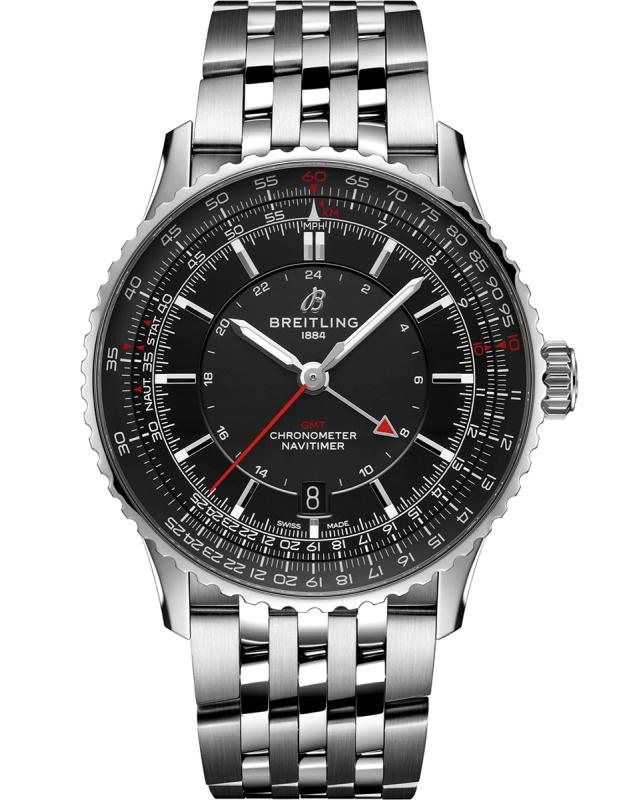
Breitling Navitimer GMT 41 Automatic Stainless Steel
Ref. A32310
$4,188
Not in Stock — Estimated Delivery 3–4 Weeks

Breitling
Breitling Navitimer B01 Chronograph 43 Japan Limited (100-piece edition)
2016 • Excellent
$8,000
Not in Stock — Estimated Delivery 3–4 Weeks
Breitling
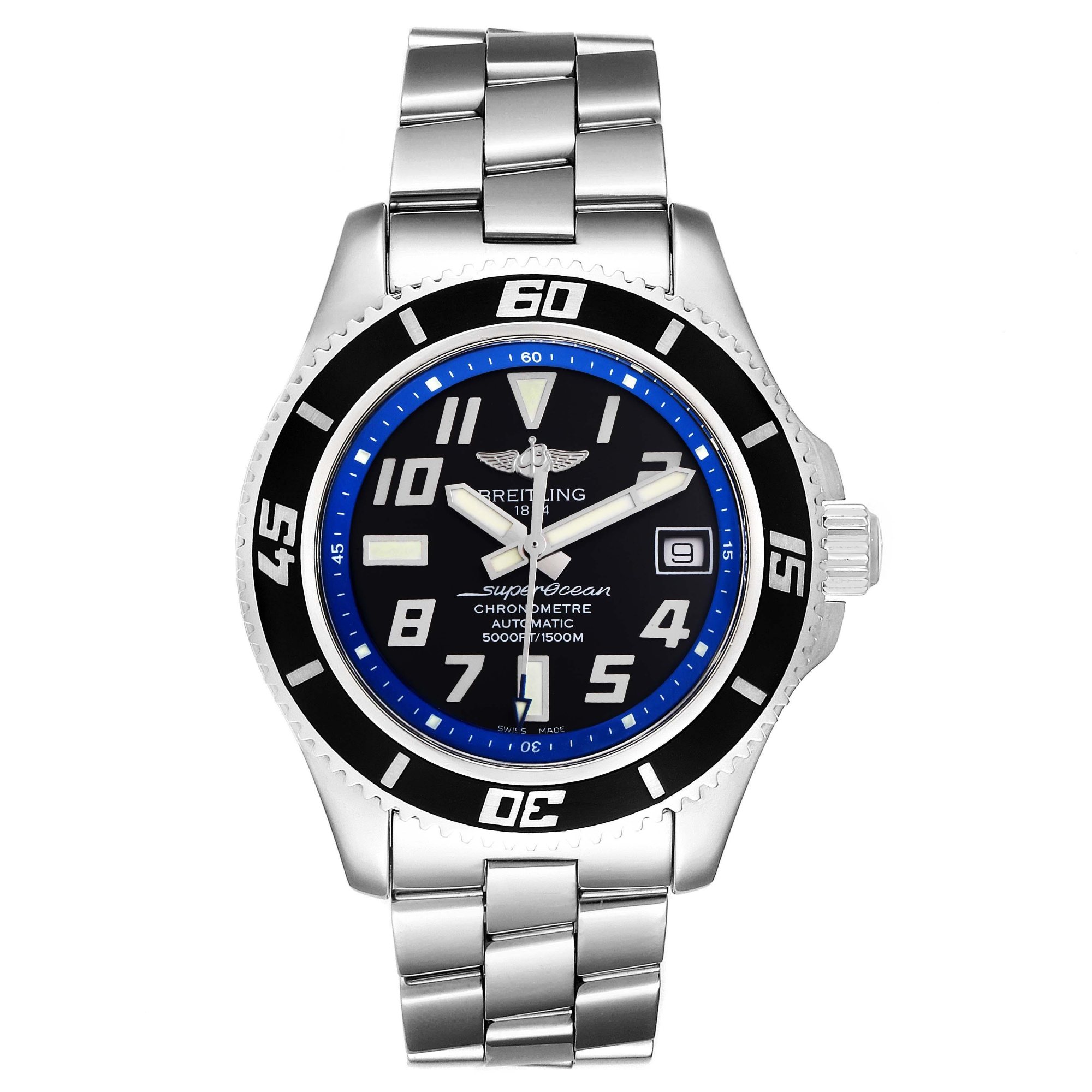
Breitling Superocean 42 ("Abyss Blue", Black/blue dial, Black bezel)
Ref. A17364
$2,285
Not in Stock — Estimated Delivery 3–4 Weeks