Blogs / Collector Notes
Omega Seamaster 300 Ref. 166.024: The Vintage Dive Watch Collectors Can't Ignore
11 min read · 10/19/2026
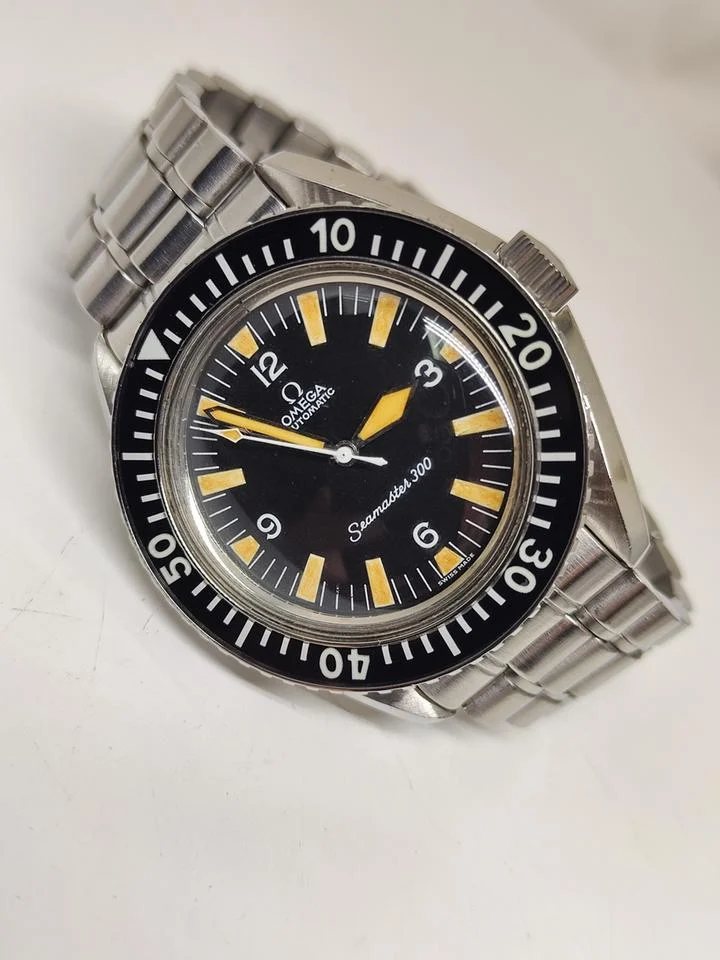
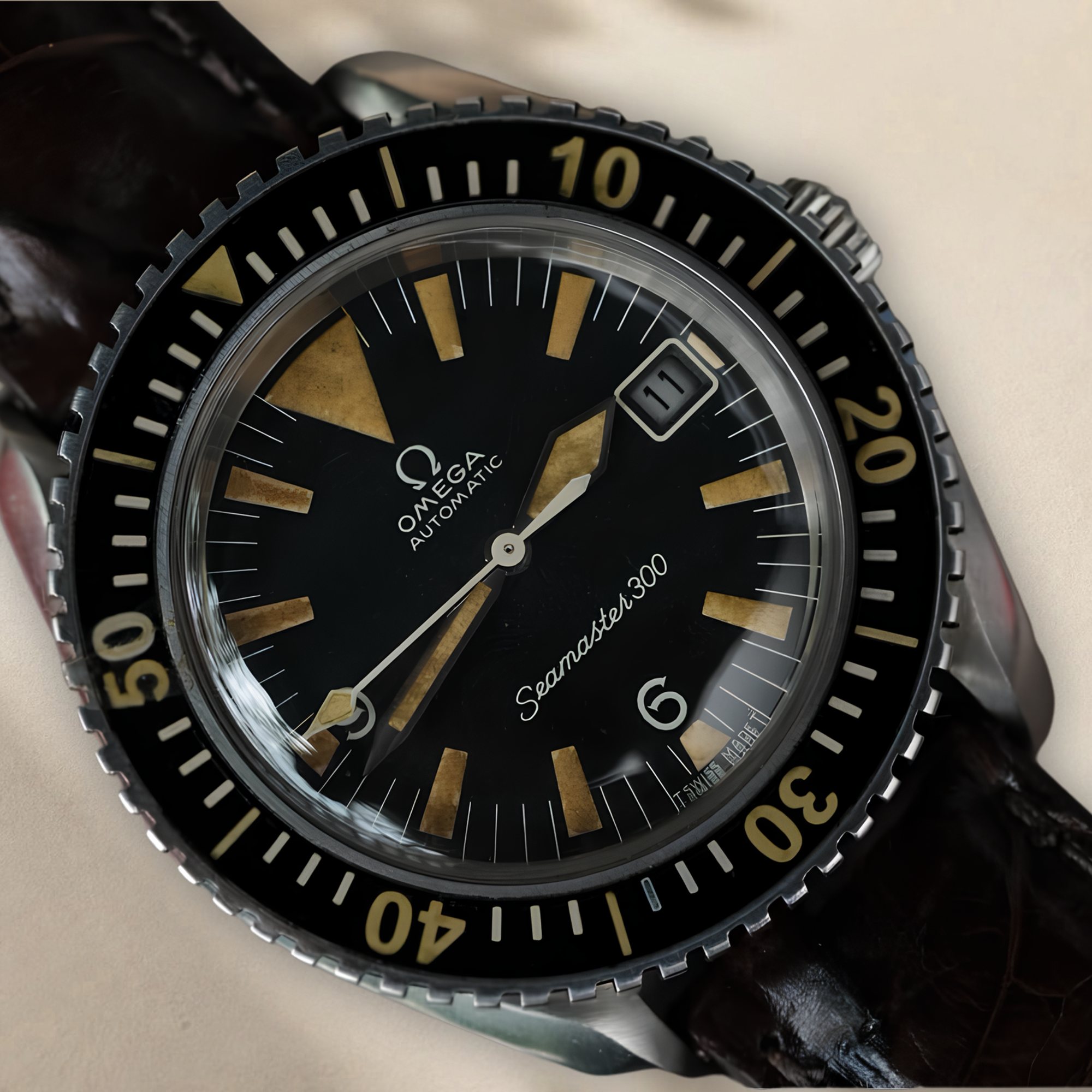
The vintage Omega Seamaster 300 reference 166.024 captures the spirit of 1960s professional dive-watch design. Featuring a stainless steel case, date display, rotating dive bezel, and automatic Caliber 565, this collectible reference combines practical engineering with the character and complexity of vintage Omega watchmaking. Discover its history, key features, collector appeal, and what to examine before buying an original example.
Omega Seamaster 300 Ref. 166.024: A Vintage Diver With a Story to Tell
There is something special about a vintage dive watch that wears its history honestly. The softened edges of a steel case, the changing color of aged luminous material, and the unmistakable shape of a period-correct bezel can make a watch feel like a surviving piece of another era. The Omega Seamaster 300 reference 166.024 has that kind of appeal.
Introduced during the 1960s, the date-equipped Seamaster 300 belongs to a period when professional diving was pushing watchmakers to build increasingly practical, robust, and legible instruments. Its design combines a substantial stainless steel case, a rotating timing bezel, luminous hands and markers, and an automatic movement with a date complication.
But the 166.024 is more than an attractive vintage Omega. It belongs to a family of Seamaster 300 references that evolved through different case designs, movements, dials, hands, and bezel configurations. Understanding those details is essential to appreciating the watch, especially if you are considering buying one today.
For collectors, the attraction is a combination of engineering, history, and individuality. Two examples may carry the same reference number but differ significantly in originality, condition, and collector appeal. That is part of what makes the vintage Seamaster 300 so rewarding to study.
The Seamaster 300: Built for a World Exploring Deeper Waters
Omega introduced the Seamaster 300 in 1957 as part of its celebrated professional-watch trio, alongside the Speedmaster and Railmaster. Each model served a different purpose, and the Seamaster 300 was developed for underwater use.
The model evolved as diving equipment and expectations changed. Early Seamaster 300 watches used a different case design from the later references, and the collection developed through multiple iterations. By the 1960s, the Seamaster 300 had become a more substantial instrument, with a broader bezel, a redesigned case, and more prominent hands and luminous markings.
The reference 166.024 belongs to this later design family. It is closely related to the no-date reference 165.024, but the addition of a date display gives it a distinct identity. The change may seem modest, yet it affects the dial layout, the movement, and the practical experience of wearing the watch.
What makes this generation interesting is that it retains the straightforward character of a professional tool watch. There is no unnecessary visual complication. The bezel is there for timing, the hands and markers prioritize legibility, and the case is designed around the demands of a water-resistant sports watch.
What Makes Reference 166.024 Different?
The reference number is the first thing a collector should understand. Omega's Seamaster 300 family includes several references that look related but are not interchangeable in every detail.
The reference 165.024 is the closely related no-date model. The 166.024 adds a date display at approximately three o'clock and is commonly associated with the automatic Omega Caliber 565. The date version is generally associated with production beginning around 1966 to 1967, although the exact dating of an individual watch should be established through its serial number and documentation rather than appearance alone.
The 166.024 is also known for its approximately 42 mm stainless steel case, twisted or lyre-style lugs, and prominent bezel. These proportions were substantial for their era and help give the watch its confident presence on the wrist.
Collectors may encounter variations in dial layouts, luminous markers, hands, bezel inserts, and crown configurations across the wider Seamaster 300 family. These differences are not automatically evidence of a problem, but each component must be consistent with the specific watch's reference and production period.
The Case: Purposeful Steel and Distinctive Lugs
The stainless steel case is one of the defining features of the 166.024. Its substantial proportions and shaped lugs give the watch a strong silhouette, while the protective architecture around the crown helps distinguish it from the earliest Seamaster 300 designs.
The case is not simply a container for the movement. On a vintage watch, it is part of the evidence of how the watch has survived. Sharp edges, well-defined lugs, and the shape of the case shoulders can reveal whether the metal has been heavily polished over the decades.
That matters because excessive polishing can soften the lines that make this reference distinctive. A polished case is not necessarily a reason to reject a watch, but collectors should understand what has been changed and how that affects originality and value.
It is also important to remember that vintage watches have lived different lives. Some have been worn regularly, others have been serviced with replacement parts, and some have spent decades stored away. The condition of the individual watch matters more than a simple claim that all examples are equally desirable.
The Bezel: A Working Tool, Not Just a Vintage Detail
The rotating bezel is central to the identity of a traditional dive watch. Before a dive, the wearer can align the bezel's timing marker with the minute hand. As time passes, the minute hand's position relative to the bezel provides a visual indication of elapsed time.
On the vintage Seamaster 300, the bezel contributes heavily to the watch's character. The insert, its markings, and the way it has aged can change the entire appearance of an example. Collectors often pay close attention to whether the bezel is original, a correct period replacement, a later service component, or an aftermarket part.
Vintage bezel inserts can show wear, fading, damage, or discoloration. Some signs of age are part of the appeal, but attractive aging does not prove originality. A replacement component can also age over time, so the bezel should be examined alongside the dial, hands, case, and movement.
For an enthusiast, the bezel is one of the most rewarding details to study because it connects the watch's practical purpose with its visual identity. It was designed to support timing, but it has also become one of the features that makes vintage dive watches so recognizable.
The Dial, Luminous Markers, and Hands
The 166.024's dial is designed around legibility. Applied luminous hour markers, bold hands, and a clear date display make it easy to read the time quickly. That straightforward layout is part of the reason vintage professional watches remain so appealing today.
Examples of the broader Seamaster 300 family can be found with different dial layouts and hand styles, including variations in the marker at twelve o'clock. The exact configuration must be checked against the reference and period of the individual watch.
Collectors also pay close attention to the luminous material. Depending on the watch's age and specification, the original lume may have changed color over time. This can give a vintage dial a warm appearance, but color alone cannot establish that the dial and hands are original.
Relumed hands, replacement dials, refinished surfaces, and service components can all affect a watch's originality. Some replacements may be legitimate results of servicing, while others may be aftermarket changes. The important question is whether the watch is accurately represented and whether its components make sense together.
This is where vintage collecting becomes more than admiring photographs. A watch may look beautiful in a listing, but close inspection and reliable documentation are necessary before drawing conclusions about authenticity.
Inside the Omega Caliber 565
The date-equipped Seamaster 300 reference 166.024 is commonly associated with Omega's automatic Caliber 565. This movement belongs to Omega's family of automatic mechanical calibers developed during the era when the brand was building a strong reputation for robust everyday and professional watches.
The Caliber 565 provides automatic winding, a date display, and a central seconds hand. It is a period-appropriate movement for the reference and an important part of what distinguishes the 166.024 from its no-date relative.
For a vintage buyer, however, the caliber name is only the beginning. The movement should be inspected by a qualified watchmaker to assess its condition, service needs, and consistency with the claimed reference. A movement that looks correct in a photograph may still require significant maintenance.
Service history matters because lubricants age, seals deteriorate, and components wear. Even a watch that appears to keep time can need professional attention. Before buying, ask whether the movement has been serviced recently and whether documentation is available.
There is also an important distinction between historical specifications and current performance. A vintage watch was designed to meet the requirements of its time, but age and previous repairs can affect its performance today. It should not be assumed to retain its original water resistance simply because it was sold as a dive watch.
Specifications at a Glance
- Brand: Omega
- Collection: Seamaster 300
- Reference: 166.024
- Era: 1960s, with the date-equipped model associated with the mid-to-late 1960s
- Case material: Stainless steel
- Case diameter: Approximately 42 mm
- Movement: Omega Caliber 565, automatic
- Display: Hours, minutes, central seconds, and date
- Bezel: Rotating elapsed-time bezel
- Crystal: Period-appropriate crystal; confirm the exact component on the individual watch
- Dial: Commonly black, with configuration varying by example
These are general reference-level details. Vintage watches can have legitimate production variations and later service parts, so the precise configuration of any example should be confirmed from its movement, serial number, case, dial, and supporting records.
Vintage Seamaster 300 vs. Modern Seamaster 300
It is tempting to compare the 166.024 directly with the modern Omega Seamaster 300 because they share a name and a broad design heritage. Yet the watches belong to very different periods of watchmaking.
The vintage 166.024 has the proportions, dial details, movement architecture, and material aging associated with a watch produced in the 1960s. Its appeal often comes from the individuality of each surviving example and the historical details that can be examined up close.
Modern Seamaster 300 models use contemporary materials, manufacturing techniques, movements, and specifications. They are generally easier to wear as everyday watches without the same concerns about original components and decades-old seals. Their exact specifications vary by generation and reference.
Neither approach is automatically better. The modern watch offers contemporary convenience, while the vintage model offers a direct connection to an earlier period of dive-watch design. The right choice depends on whether the buyer values modern performance, historical character, collectability, or a combination of these qualities.
What Collectors Should Check Before Buying a 166.024
- Reference and serial numbers: Confirm that the case and movement details are consistent with the claimed model and production period.
- Movement: Verify the caliber and have its condition assessed by a qualified watchmaker.
- Dial: Look for signs of refinishing, replacement, incorrect printing, or luminous material that does not match the watch's claimed history.
- Hands: Check their style, length, finish, and luminous material against the specific reference and period.
- Bezel insert: Determine whether it is original, period-correct, a service replacement, or aftermarket.
- Case condition: Examine the lugs, edges, crown area, and caseback for polishing, damage, or incorrect parts.
- Crown and water resistance: Confirm the crown configuration and do not assume a decades-old watch is safe for swimming or diving without appropriate professional testing.
- Service history: Request records and budget for maintenance if the history is unknown.
- Bracelet and accessories: Check whether any included bracelet, end links, box, or papers are correct for the specific watch.
- Price: Compare genuinely similar examples by condition, originality, and configuration rather than relying only on advertised asking prices.
Collector Appeal: Why the 166.024 Is Worth Studying
What makes the Omega Seamaster 300 reference 166.024 compelling is the balance between its practical purpose and its vintage character. It has the visual clarity of a professional dive watch, the convenience of a date display, and a movement that reflects Omega's mechanical watchmaking during the 1960s.
From an enthusiast's perspective, one of the most interesting things about this reference is how much information can be found in the details. The dial, bezel, hands, crown, case shape, and movement all contribute to the story of the watch. A collector can spend considerable time learning the variations and understanding why two examples that look similar may not be equally original or desirable.
That complexity is also why buying one requires care. The vintage market includes watches with replacement components, refinished dials, incorrect hands, and other changes that may not be obvious in photographs. An attractive patina can be appealing, but it should never substitute for authentication and a careful inspection.
For a retailer, the same principle applies. A beautiful vintage Omega is not automatically a sound acquisition. Its originality, mechanical condition, servicing requirements, and realistic resale value all need to be established before a purchase decision is made.
Final Thoughts: A Classic Omega Built Around a Practical Purpose
The Omega Seamaster 300 reference 166.024 represents an important chapter in the development of professional dive watches. Its stainless steel case, rotating bezel, luminous display, date function, and automatic Caliber 565 combine practical features with a design that has become deeply associated with vintage Omega collecting.
Its appeal is not simply nostalgia. The watch offers an opportunity to study how a professional tool watch was designed, how its features evolved, and how decades of use and servicing can shape the condition of an individual example.
For collectors who appreciate vintage engineering and historical detail, the 166.024 rewards a closer look. The best example is not necessarily the one with the most dramatic patina or the highest asking price. It is the watch whose reference, components, condition, and history stand up to careful examination.
Explore Available Watches
Discover the vintage watches available from The Aviators Watch. If a Seamaster 300 reference 166.024 is available, review its exact configuration, movement, condition, service history, and asking price. For a vintage dive watch of this age, professional authentication and a current assessment of water resistance are essential before purchase.