Blogs / Buying Guides
Omega Seamaster 300: The Vintage Dive Watch You Have to Examine Carefully
8 min read · 10/8/2026
The vintage Omega Seamaster 300 is one of Omega's most recognizable dive watch designs, but identifying and evaluating an individual vintage example can be considerably more complicated than recognizing the model. From original dials and bezels to service components, lume, case geometry and movement information, this is a watch where the details can tell a much bigger story.
Omega Seamaster 300: The Vintage Dive Watch You Have to Examine Carefully
There are vintage watches that are easy to understand.
And then there is the Omega Seamaster 300.
At first glance, the formula couldn't be simpler: a black dial, rotating dive bezel, luminous hour markers, large hands and a rugged stainless steel case.
But spend some time studying vintage Seamaster 300s and you'll discover that these watches can present one of the more interesting puzzles in vintage Omega collecting.
Original dials. Service dials. Replacement bezels. Relumed hands. Rebuilt watches. Period correct parts. Later Omega components.
Sometimes all on the same watch.
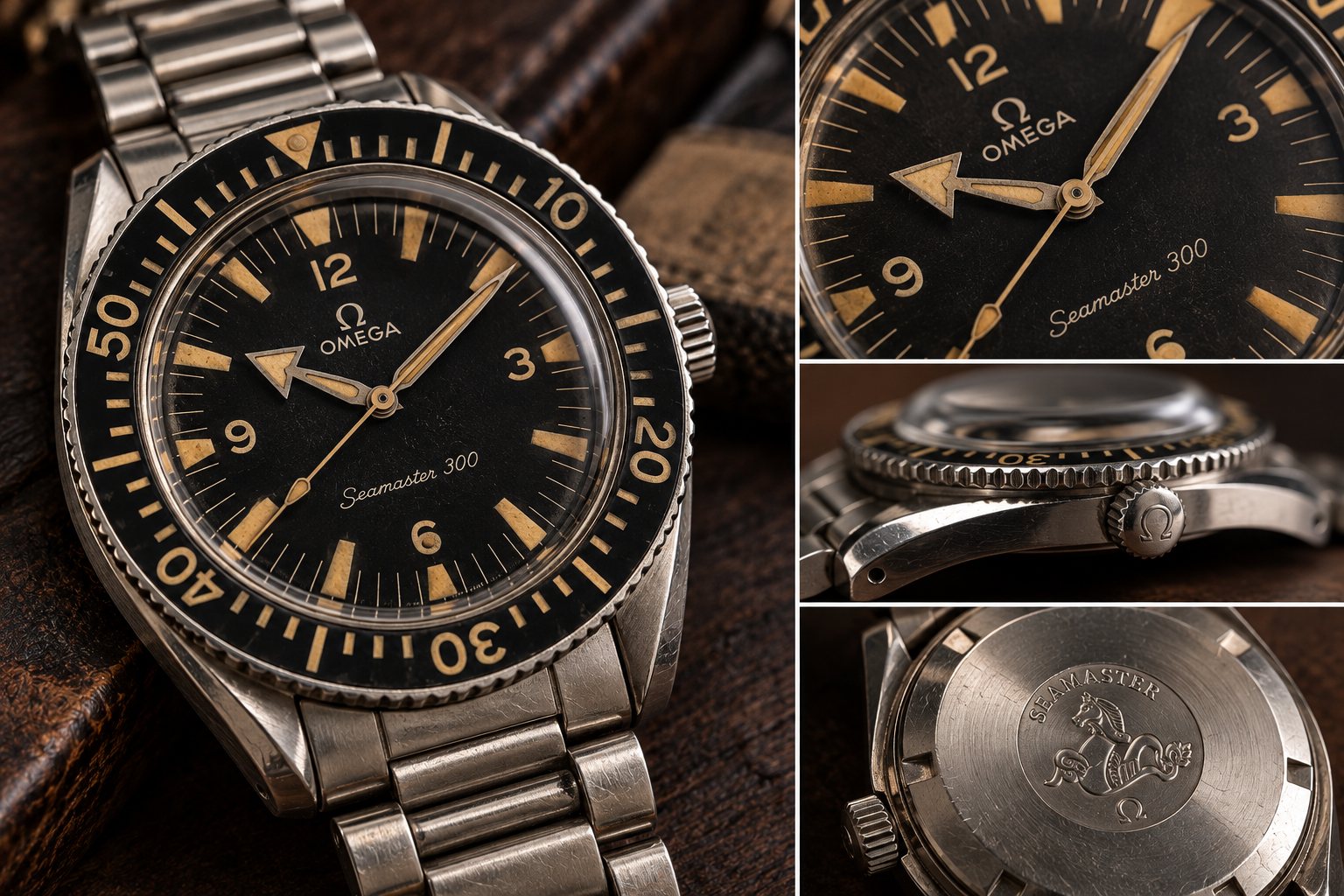
The Seamaster 300 pictured here is exactly the sort of watch that demonstrates why buying vintage is about much more than simply recognizing the name on the dial.
The Seamaster 300 Was Built as a Tool
The Seamaster name predates the Seamaster 300, but the latter emerged from a very different philosophy than Omega's more traditional dress oriented watches.
Omega introduced the original Seamaster 300 in 1957 as part of its Professional trilogy alongside the Speedmaster and Railmaster. The Seamaster 300 was created with ocean diving in mind, giving Omega a purpose built professional watch alongside its racing and anti magnetic models.
The design centered on practical underwater requirements.
That meant strong legibility, a rotating timing bezel, luminous markings and a case designed around the demands of diving.
The result became one of Omega's defining dive watch designs.
A Dial Designed to Be Read, Not Decorated
Look at the watch pictured here and virtually everything about the dial serves a purpose.
The black background creates strong contrast. Large luminous hour markers can be recognized quickly. Broad hands dominate the dial rather than disappearing into it.
Around the outside sits the rotating bezel, with large numerals and minute markings designed to track elapsed time.
Even decades later, the basic visual language is immediately recognizable as that of a dive watch.
There is very little decoration because decoration wasn't the point.
Legibility was.
That functional design is also one reason the Seamaster 300 has aged so well aesthetically.
Then Comes the Lume
And this is where vintage watches become especially interesting.
The luminous material on an old dive watch can become one of its most recognizable characteristics.
Over decades, luminous compounds can change in appearance as they age, sometimes developing cream, yellow, orange or brown tones. Collectors often describe this visible aging as patina.
On the watch photographed here, the warm coloration of the hour markers, hands and bezel markings creates a dramatic contrast against the black dial.
It's visually beautiful.
But color alone does not prove originality.
That's important.
Luminous material may have been replaced or reapplied during the life of a watch. Hands can be changed. Dials can be serviced. Bezel components can be replaced.
Two parts having approximately the same color doesn't necessarily mean they have been together since the watch left Switzerland.
This is where examination becomes more important than appearance.
The Vintage Seamaster 300 Authenticity Problem
The Seamaster 300 presents collectors with an unusual challenge because surviving watches can contain components from different periods.
Omega supplied replacement components as part of servicing its watches, and vintage examples can therefore contain later genuine Omega service parts alongside older components.
There are also watches assembled using combinations of genuine Omega components, vintage components, later service parts and, in some cases, aftermarket parts.
Consequently, the question:
Is this a real Omega Seamaster 300?
can sometimes be too simplistic.
A more useful set of questions is:
Which components are original to this particular watch?
Which are period correct?
Which are genuine Omega service replacements?
Which have been restored?
And are any components aftermarket?
Those distinctions can have a substantial effect on collectibility and value.
Original Doesn't Always Mean Perfect
There is another counterintuitive aspect of vintage watch collecting.
The cleanest looking watch isn't necessarily the most desirable.
A heavily aged but original dial can sometimes be more interesting to a collector than a flawless replacement dial.
A faded bezel may be preferable to a brand new aftermarket replacement.
Scratches can be acceptable.
An over polished case that has lost its original geometry may be more concerning.
That doesn't mean restoration is inherently bad. It means restoration should be understood and disclosed.
At The Aviators Watch, that's an important distinction.
We would rather describe what we can establish about a vintage watch and acknowledge what we cannot establish than turn uncertainty into a claim of originality.
Look at the Case
The Seamaster 300 isn't interesting only from the front.
Viewed from an angle, the case becomes a major part of the design.
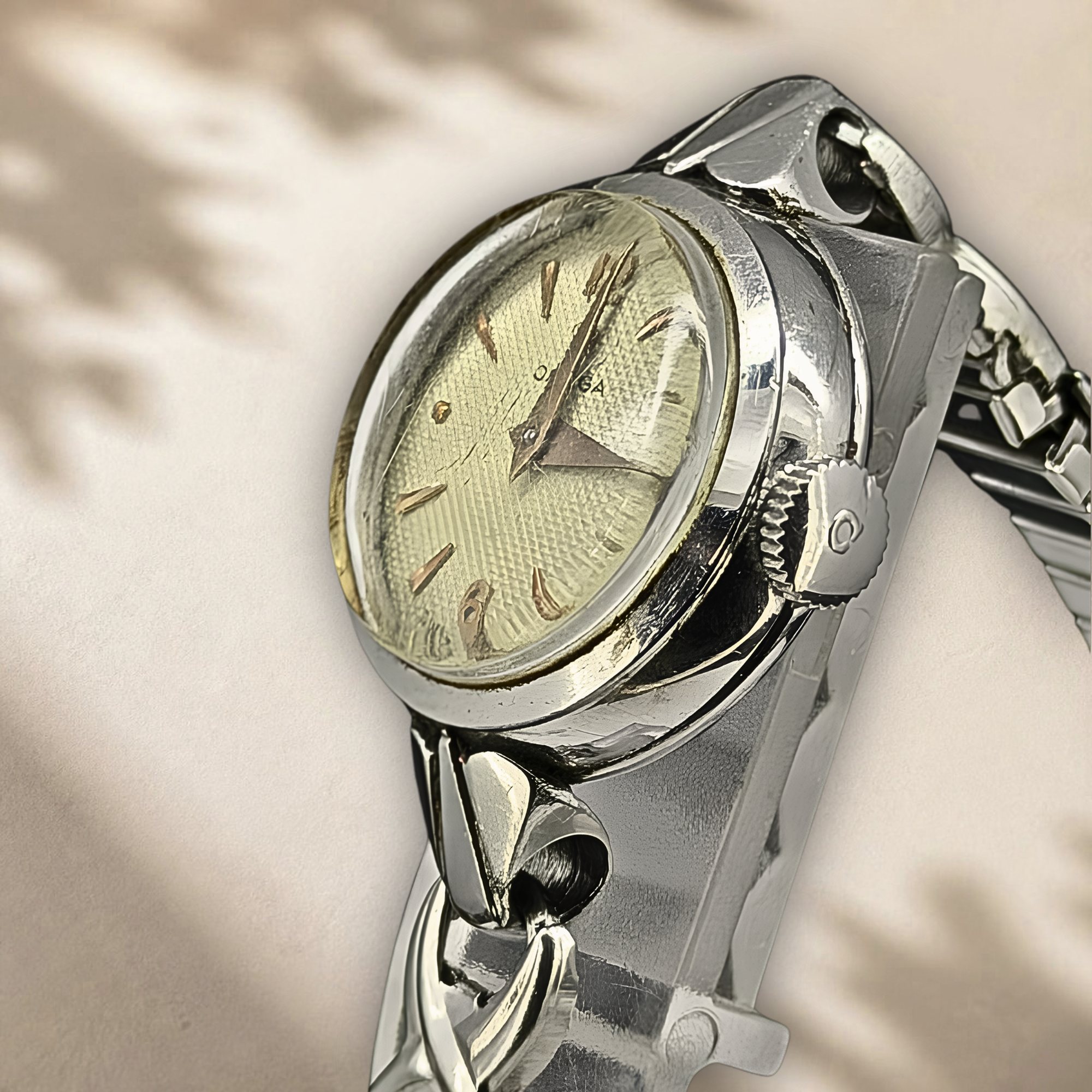
The substantial lugs, raised crystal, rotating bezel and crown give the watch a purposeful profile completely different from the thin Omega dress watches of the same broad era.
That comparison tells us something important about Omega.
The company wasn't producing one type of watch.
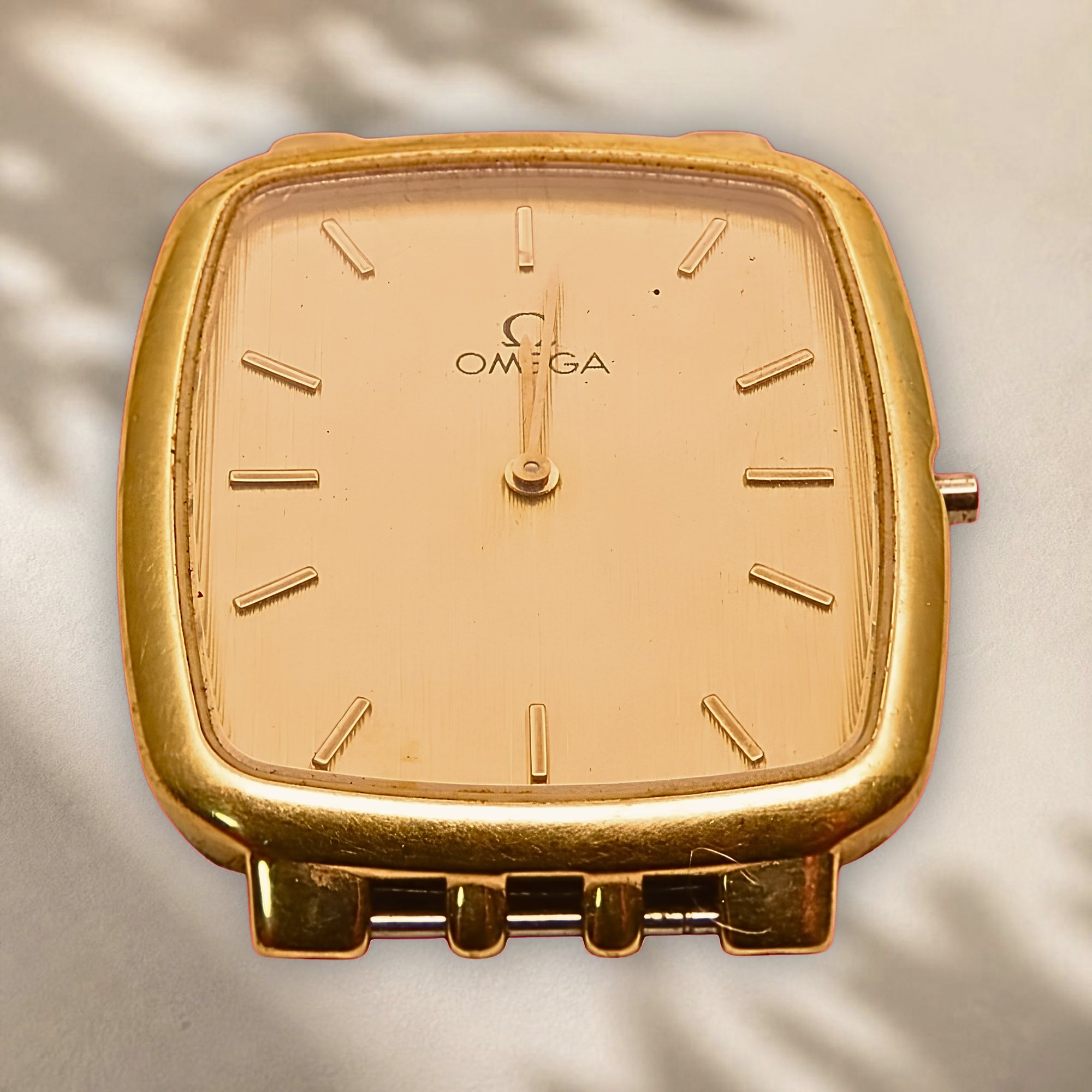
It could make an extremely thin, understated dress watch and also produce a substantial professional dive watch designed around an entirely different purpose.
That diversity is one of the reasons vintage Omega collecting can become addictive.
Why the Bezel Matters So Much
On a modern watch, replacing a scratched bezel may seem like routine maintenance.
Vintage collecting changes the equation.
The bezel is one of the visually important components of a Seamaster 300, and its type, condition and originality can materially affect how collectors evaluate a watch.
The same applies to the dial and hands.
That means an attractive Seamaster 300 should never be evaluated solely from a photograph of the complete watch.
Ideally, a serious examination should include the movement, case reference and serial information as well as detailed photographs of the dial, hands, bezel, crown and case.
Those details help establish what the watch actually is rather than simply what it resembles.
The Movement Matters Too
Open a vintage Omega and another part of its history becomes accessible.
Movement caliber and serial information can help determine whether what is inside makes sense for the case and apparent period of the watch.
The inside caseback reference can provide another important piece of evidence.
That's why we would not assign the watch pictured here a specific reference or production year based solely on its external appearance.
There are recognizable visual clues, certainly.
But identification and authentication are not the same thing.
For a vintage watch with potentially significant collector value, opening the case and documenting what is inside is worth doing.
Why the Seamaster 300 Still Works Today
Strip away the collector terminology and there is another reason these watches remain desirable.
The design is simply good.
The dial is highly legible.
The bezel gives the watch visual character.
The case has presence without relying on the enormous dimensions found on some contemporary dive watches.
And the aging that occurs across surviving examples means two vintage Seamaster 300s can develop completely different personalities.
One might remain stark black and white.
Another can develop creamy lume.
Another may have a heavily faded bezel.
Each has lived a different life.
A Watch and an Investigation
That may be the best way to understand vintage Seamaster 300 ownership.
You're not simply buying a model.
You're buying one individual example of that model, with decades of maintenance, wear, repairs and possible component replacement behind it.
The name on the dial tells you what family of watch you're examining.
It doesn't tell you its entire history.
Finding that history requires looking deeper.
And for us, that's one of the most enjoyable parts of vintage watches.
The Seamaster 300 as a Vintage Collector's Puzzle
The original Seamaster 300 design has remained recognizable for generations, which is one reason the vintage examples continue to attract attention.
But recognition can also create a trap.
A watch can look exactly like the Seamaster 300 a collector expects to see and still require much more investigation before its originality can be established.
The dial, bezel, hands, case, crown, movement and caseback all tell different parts of the story.
When those pieces agree with one another, confidence increases.
When they don't, the differences become clues.
That is what makes vintage collecting so different from simply buying a modern watch from an authorized retailer.
Why the Seamaster 300 Remains Special
The Omega Seamaster 300 is already a significant watch in Omega's history.
Its roots reach back to 1957, when Omega positioned it as a professional diving watch within the company's original Professional trilogy. :chatgpt-content-reference{index="1"}
But the surviving vintage examples tell an even more interesting story.
They show how watches change after leaving the factory.
Parts are serviced.
Components are replaced.
Cases are polished.
Lume ages.
Bezels fade.
Owners leave their mark.
And eventually, decades later, another collector has to piece the story together.
Final Thoughts
The Omega Seamaster 300 is one of Omega's great vintage dive watch designs.
Its black dial, luminous markers, broad hands, rotating bezel and purposeful case created a visual language that remains recognizable decades later.
But buying a vintage Seamaster 300 requires more than recognizing that design.
Originality matters.
Service history matters.
Case condition matters.
The movement matters.
The bezel matters.
And sometimes, the things that don't match are just as informative as the things that do.
At The Aviators Watch, that's precisely the kind of watch we like to examine.
Because sometimes the most interesting question isn't:
What watch is this?
It's:
What happened to this particular watch during the decades since it was made?