Blogs / Collector Notes
Tudor Submariner 7016: The Vintage Snowflake That Forged Its Own Identity
8 min read · 10/19/2026

Introduced in the late 1960s, the Tudor Submariner reference 7016 helped establish the Snowflake design that would become one of the brand's defining signatures. With its angular luminous hands, square hour markers, automatic ETA movement, and robust Rolex-signed case, the 7016 represents a pivotal chapter in Tudor's evolution from a more affordable alternative to a watchmaker with a distinct tool-watch identity.
Tudor Submariner 7016: The Vintage Snowflake That Forged Its Own Identity
Some watches become icons because they look expensive. Others become icons because their design serves a purpose. The vintage Tudor Submariner reference 7016 belongs firmly in the second category.
Introduced around the end of the 1960s, the 7016 helped usher in a new generation of Tudor dive watches. Its distinctive square hour markers and angular hands gave it a personality that was immediately recognizable. Collectors would eventually give those hands a nickname that became inseparable from Tudor's identity: Snowflake.
But the 7016 is more than an interesting dial and a memorable silhouette. It represents a turning point in Tudor's history, combining a rugged dive-watch case with an ETA automatic movement and a design that stood apart from the more familiar Rolex Submariner aesthetic.
A New Chapter in Tudor Submariner History
Tudor introduced the Oyster Prince Submariner reference 7016 alongside the date-equipped reference 7021 in its 1969 catalogue. These watches marked the beginning of a new era for the brand's dive-watch collection.
The earlier reference 7928 had established much of the Submariner's familiar foundation. The 7016 retained the practical tool-watch formula while introducing a new dial design and a different automatic movement. It was a meaningful evolution rather than a complete departure from the watches that came before it.
The 7016 was also part of Tudor's gradual move toward a more independent visual identity. Although Tudor and Rolex shared important elements of their watchmaking infrastructure during this period, Tudor's Snowflake design gave its dive watches a distinctive appearance of their own.
The Snowflake Design: Function Before Fashion
The most immediately recognizable feature of a Snowflake 7016 is its unusual handset. The broad, angular hour hand carries a square luminous section, while the dial uses large square-shaped hour markers. Together, these features create a visual language that differs sharply from the more traditional Mercedes-style hands and round markers associated with earlier Submariners.
These design choices were intended to improve underwater legibility. Tudor's historical account connects the Snowflake design to the needs of divers, including the French Navy, whose work placed particular importance on reading a watch clearly in challenging underwater conditions.
There is a practical logic to the design. A diver should be able to distinguish the hands and hour markers quickly, including in low visibility. The large luminous areas and contrasting geometric shapes gave the 7016 a bold, instrument-like appearance.
That functional origin is part of what makes the Snowflake so compelling today. It was not simply a decorative flourish. It became a signature because it gave the watch a recognizable face while serving a real purpose.
Not Every Tudor 7016 Is a Snowflake
Here is an important detail for collectors: the reference 7016 is not limited to the familiar Snowflake dial.
Specialist vintage references document early 7016 examples with a Tudor rose dial inherited from the preceding design language, as well as shield-logo configurations with conventional round luminous markers. The Snowflake dial and handset emerged as the design evolved.
This means that a buyer should not assume every genuine 7016 must have square hour markers and Snowflake hands. The dial, hands, case features, serial number, and movement should be assessed together to determine whether an individual watch is consistent with its period and configuration.
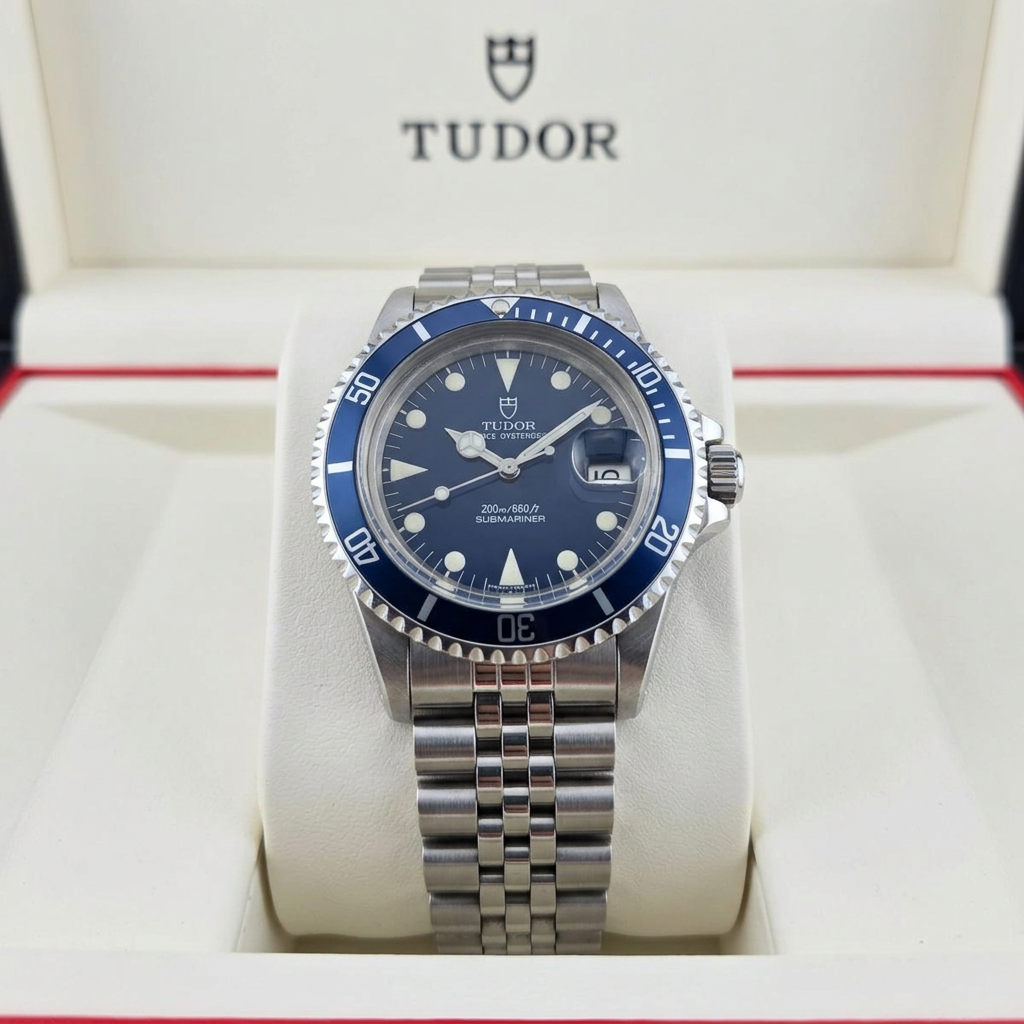
Black and blue dial versions are also documented. Blue examples are particularly appealing to collectors who want a vintage Tudor diver with a little more visual character, but color alone does not establish a watch's age, originality, or rarity.
Movement and Technical Specifications
The reference 7016 introduced a major mechanical change. Tudor replaced the earlier automatic calibre 390 with the ETA calibre 2483. Tudor's historical documentation states that the movement operated at 18,000 beats per hour, the same frequency as its predecessor.
The 7016 was a time-only watch, with no date display. The related reference 7021 used the ETA calibre 2484 and added a date window at three o'clock.
- Model: Tudor Oyster Prince Submariner
- Reference: 7016, commonly written as 7016/0
- Era: Late 1960s through the mid-1970s, with production dating varying by source and individual example
- Movement: Automatic ETA calibre 2483
- Frequency: 18,000 beats per hour
- Display: Hours, minutes, and seconds; no date
- Case: Stainless steel, approximately 39 mm
- Historical depth rating: 200 metres when new, according to Tudor's historical specifications
- Crystal: Thick, flat Plexiglas
- Bezel: Rotating bezel with 60-minute graduation
These are historical specifications, not a guarantee of the condition or performance of a surviving vintage watch. Water resistance in particular should never be assumed from the original rating alone. Seals, crown, caseback, crystal, and case condition may have changed over decades of use.
The Case and the Rolex Connection
The 7016 continued the Submariner's established stainless-steel tool-watch construction. Tudor's historical material describes a case measuring approximately 39 mm, with a screw-down crown, round crown guards on the standard configuration, and a case associated with Rolex manufacturing.
Early examples deserve particular attention because specialist collectors identify a short-lived semi-pointed crown-guard configuration. Later examples generally use rounded crown guards. These small differences matter when assessing whether a case is consistent with the watch's claimed production period.
The Rolex connection is part of the 7016's appeal, but it should not obscure Tudor's own contribution. The watch's case architecture reflects the shared history of the two brands, while the Snowflake dial and handset helped Tudor develop a distinctive visual identity.
The French Navy Connection
Tudor's relationship with professional divers is a significant part of the Submariner story. The brand's historical material identifies the 7016 as an important step in the development of its Snowflake design and records French Navy markings on some examples from 1974 onward.
Military-issued watches are especially interesting because their history can sometimes be traced through caseback engravings, service records, and documented provenance. A genuine military association, however, should be supported by evidence. An engraving or military-style appearance by itself does not prove that a particular watch was issued to a service member.
For collectors, the distinction is crucial. A civilian 7016 can be historically important in its own right, while a documented military-issued example may tell a more specific story about the watch's service history.
The Vintage Dial Problem Collectors Should Know
One issue repeatedly discussed by vintage Tudor specialists is deterioration affecting some early 7016 and related 7021 dials. Collectors often describe bubbling or flaking beneath the dial's surface as dial rot.
The condition of an individual dial can vary considerably. Deterioration may affect the appearance of the watch, and evidence of moisture exposure can raise additional concerns about the movement and case. At the same time, a damaged dial should not automatically be treated as proof of water ingress: specialists have documented lacquer deterioration in examples where the precise cause is not established.
For a buyer, the important questions are whether the dial appears original, whether the hands and luminous material are consistent with the watch, whether the movement is correct, and whether any replacement or restoration work has been disclosed.
A heavily restored example may still be attractive to someone who wants to wear the watch, but it should not be valued in the same way as an example with well-preserved, original components. Condition and originality are central to the vintage collecting equation.
What to Check Before Buying a Tudor 7016
- Dial and hands: Check whether the rose, shield, or Snowflake configuration is plausible for the specific watch. Look for replacement hands, reluming, refinished dials, and inconsistencies in printing.
- Movement: Have a qualified watchmaker inspect the movement and verify that it is appropriate for the reference.
- Case and crown guards: Examine the case for excessive polishing, softened edges, corrosion, and crown-guard shapes that do not match the claimed period.
- Serial and caseback: Compare the serial number, caseback markings, and other identifying details against specialist references. Serial-date charts are estimates, not definitive proof.
- Bezel and crystal: Check the condition and consistency of the bezel insert and Plexiglas crystal. Replacement parts can affect originality and value.
- Bracelet: Confirm whether the bracelet is period-correct and whether its end links and clasp are appropriate for the watch. A period-correct bracelet is not automatically original to that specific watch.
- Service history: Ask for recent service documentation and a clear account of any replaced parts or restoration work.
- Water resistance: Do not swim or dive with a vintage example unless it has been professionally inspected and pressure-tested for that purpose.
Why the Tudor Submariner 7016 Still Matters
The 7016 sits at an important point in Tudor's development. It retained the practical foundations of a traditional dive watch while introducing the Snowflake design that would become a lasting part of the brand's identity.
Its appeal is not simply that it resembles a vintage Rolex Submariner. The more interesting story is how Tudor used a familiar tool-watch foundation to develop its own visual signature. The bold hands, square markers, and purposeful dial layout made the 7016 recognizable in its own right.
For vintage enthusiasts, the reference offers a rewarding combination of history, design, and mechanical simplicity. It also demands care: different dial generations, case variations, aging issues, and replacement parts mean that no two examples should be judged by reference number alone.
The verdict: The Tudor Submariner 7016 is a landmark vintage diver because it helped transform the Snowflake from a functional design decision into a defining Tudor signature. The best examples are not merely attractive old watches. They are well-preserved pieces of the brand's evolution, with the originality and condition to support their story.
References and Further Reading
- Tudor: Divers' Watches, 1969 to 1999 - Official historical information on references 7016 and 7021, the Snowflake design, movement, and case specifications.
- Tudor: A Naval Heritage - Official brand history covering the Marine Nationale connection and the development of the Snowflake design.
- Tudor Sub: Collector's Guide to References 7016 and 7021 - Specialist collector information on dial variations, movements, cases, and production details.
- Fratello: Tudor Submariner, A Historical Overview - Additional historical context for the evolution of Tudor's Submariner line.
Watches in this story
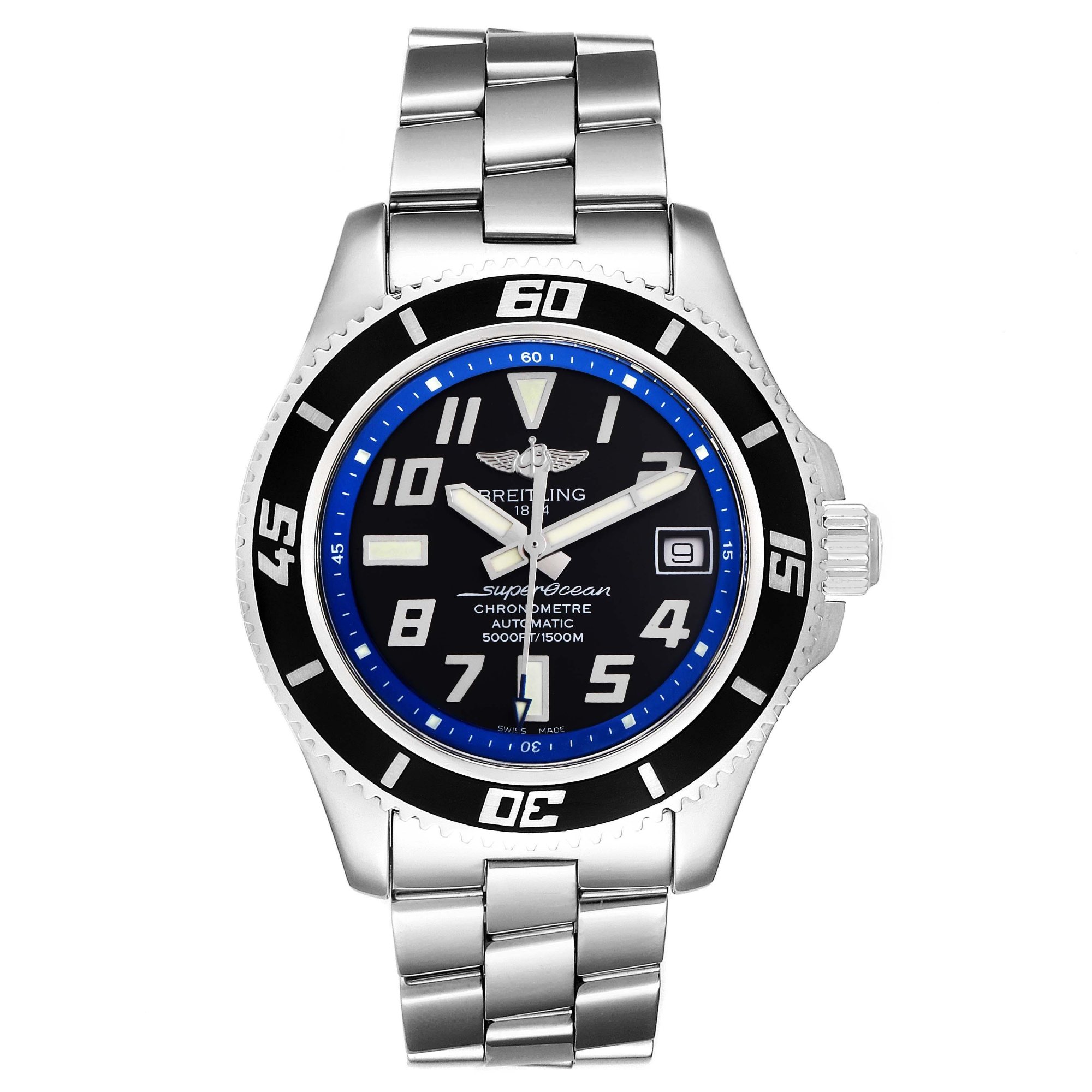
Breitling
Breitling Superocean 42 ("Abyss Blue", Black/blue dial, Black bezel)
Ref. A17364
$2,285
Not in Stock — Estimated Delivery 3–4 Weeks